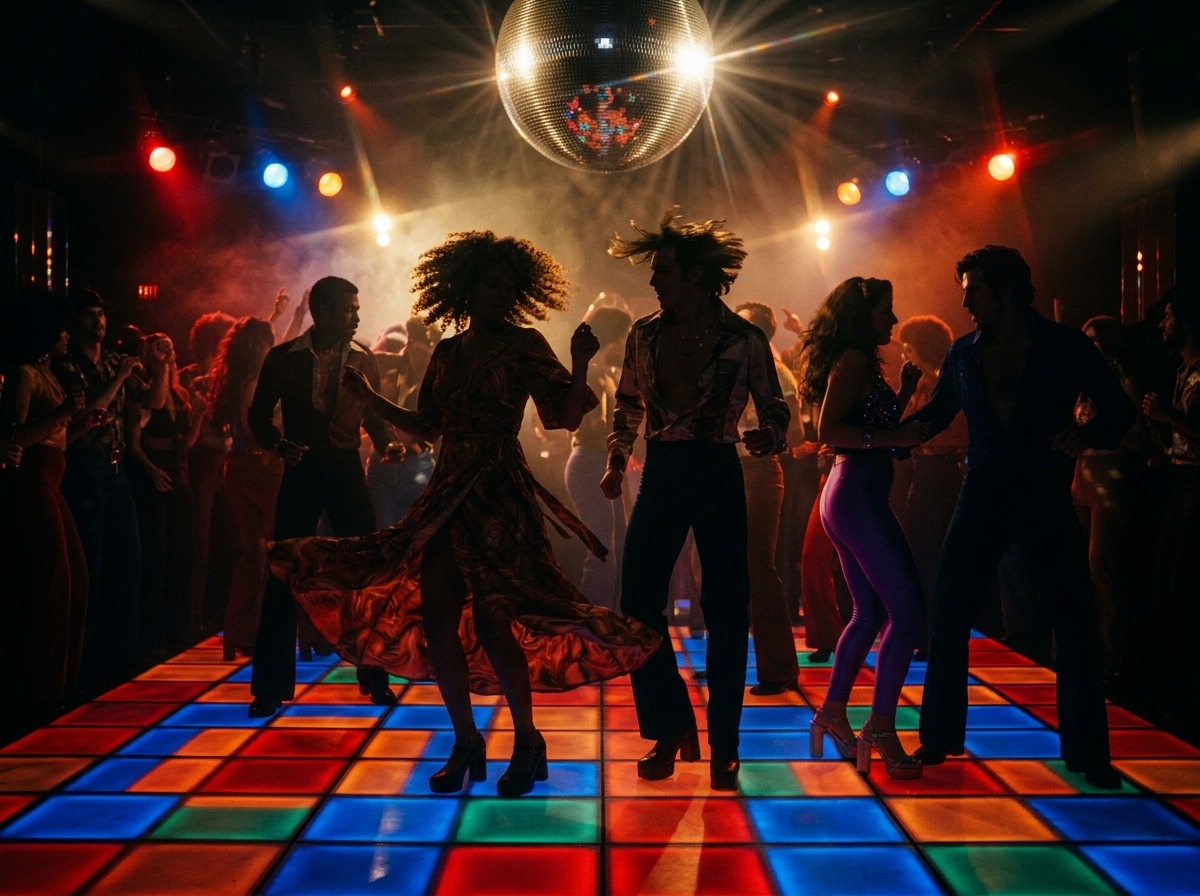
The 1970s disco era was all about bold style, dazzling fabrics, and unforgettable silhouettes. From sequined dresses and flared pants to platform shoes and shimmering tops, 70s disco fashion continues to inspire modern trends. This guide explores the era’s most iconic attire, signature silhouettes, styling ideas, and where to source authentic or modern disco-inspired pieces today.
FASHION HISTORY • TEXTILE ANALYSIS • VINTAGE AUTHENTICATION & SOURCING
| Key Takeaways
• The Dance Floor Dictated the Cut: Unlike the structured tailoring of the 1950s or the stiff mod shifts of the 1960s, disco fashion prioritized fluidity, stretch, and movement under club lighting. • Fabric Innovation Led the Aesthetic: Synthetic advances like DuPont’s silky Qiana nylon, metallic lurex yarns, liquid lamé, and slinky rayon-elastane jerseys defined the era’s signature drape and shimmer. • Architects of the Look: Designers like Roy Halston Frowick and Diane von Furstenberg stripped away restrictive linings, boning, and heavy closures, pioneering wrap dresses, caftans, and bias-cut gowns. • Day-to-Night Versatility: Signature pieces—such as silk jersey wrap dresses and wide-lapel dagger shirts—transitioned effortlessly from corporate offices to Studio 54. • Vintage Sourcing Nuance: Sizing from the 1970s runs significantly smaller than modern vanity sizing, and fragile synthetic metallics require targeted preservation methods. |
The disco era was more than a musical phenomenon; it was a watershed cultural moment where nightlife, bodily liberation, and textile technology converged. While mass media often caricatures 1970’s attire as cheap polyester suits and exaggerated wigs, true disco fashion was an art form driven by haute minimalism, sensual drapery, and high-performance synthetics.
Whether you are curating an authentic vintage collection, styling an evening ensemble, or searching for authentic pieces, this comprehensive guide examines the history, tailoring, fabrics, and market dynamics of 70s fashion disco.
1. The Socio-Cultural Evolution of 70s Fashion Disco
The transition from late-1960s countercultural bohemianism into mid-1970s discotheque glamour mirrored a broader shift in Western youth culture. As underground clubs like The Loft, The Continental Baths, and later Studio 54 and Paradise Garage gained prominence, dance floors became spaces of radical self-expression for LGBTQ+, Black, and Latino communities.
Nightclub interiors demanded clothing that reacted dynamically to strobes, mirrored disco balls, and blacklights. Heavy wools and rigid denims gave way to materials that reflected light and breathed during hours of continuous dancing. By the late 1970s, mass media—spurred by films like Saturday Night Fever (1977)—catapulted underground club aesthetics into mainstream suburban department stores, transforming disco attire into a global commercial juggernaut.
2. Textile Technology: The Science Behind the Shimmer
The distinct drape and luster of disco garments were enabled by mid-century chemical and textile advancements. Competitor guides often overlook these specific textiles, yet they are essential for identifying authentic vintage pieces:
- Qiana Nylon: Introduced by DuPont in 1968, Qiana was an engineered polyamide designed to replicate the hand-feel, luster, and drape of silk twill while remaining wrinkle-resistant and machine-washable. It became the gold-standard fabric for men’s butterfly-collar shirts and women’s fluid blouses.
- Lurex & Metallic Filaments: Lurex yarns—created by sandwiching aluminum foil between thin layers of polyester film—were knit directly into stretch jerseys, creating sparkling tops and dresses that did not tarnish with perspiration.
- Liquid Lamé: Unlike older, stiff metallic weaves, 1970s lamé applied micro-thin metallic coatings onto elasticized synthetic bases, producing a high-shine ‘wet liquid’ effect that draped cleanly over body contours.
- Ultrasuede: Developed by Dr. Miyoshi Okamoto in 1970 and popularized globally by Halston’s iconic shirt dresses, this synthetic non-woven microfiber provided the matte luxury of suede with machine-washable resilience.
3. Iconic 70s Style Dresses: Silhouettes & Designers
The definitive eveningwear of the 1970s rejected internal corsetry and petticoats in favor of natural silhouettes, bare backs, and movement.
Halter-Neck and Backless Maxi Dresses
Halston revolutionized eveningwear by engineering bias-cut dresses suspended from a single neckline anchor. Cut from fluid silk or rayon jersey, these gowns exposed the entire back while pooling loosely at the hem. Under disco spotlights, the lack of structured undergarments created a flowing line that moved in sync with the dancer.
The Diane von Furstenberg Wrap Dress
Introduced in 1974, Diane von Furstenberg’s printed jersey wrap dress became a cultural symbol of female autonomy and versatility. Crafted from a knitted cotton-rayon blend, the dress featured a deep V-neck, cinched tie-waist, and knee-length A-line skirt. Its wrinkle-resistant packability made it equally suited for boardroom workdays and late-night club gatherings.
Metallic Pleated and Tiered Gowns
Pioneered by designers like Stephen Burrows and Mary McFadden, sunburst-pleated gowns used lettuce-edge hems—a technique where overlock stitching stretches the edge of the fabric to create a rippling, wave-like border. These garments caught and dispersed light across dance floors.
4. 70s Disco Tops: Statement Cuts and Styling
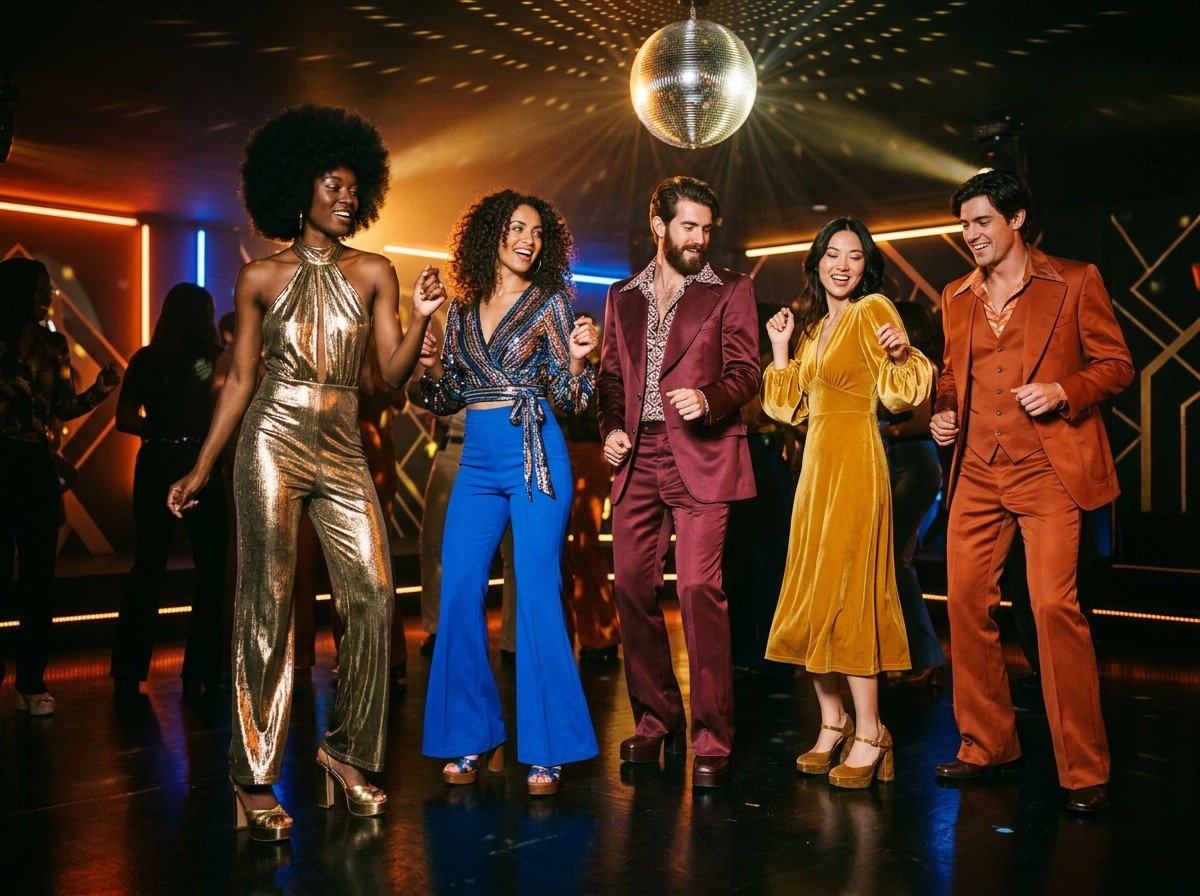
Separates allowed clubgoers to assemble personalized, expressive ensembles. 70s disco tops balanced volume and exposure, frequently pairing form-fitting bodices with dramatic sleeves.
| Top Style | Signature Materials | Structural Features | Optimal Pairing |
| Sequin Halter Crop | Disc paillettes, stretch mesh back | Ties at nape; open back; cropped above natural waist | High-waisted wide-leg trousers |
| Batwing / Dolman Blouse | Qiana nylon, silk satin, chiffon | Deep armholes tapering to fitted cuffs; dramatic wingspan | Fitted velvet or lamé hotpants |
| Dagger-Collar Button-Up | Printed polyester, silky Qiana | Exaggerated, pointed lapels; unbuttoned to mid-chest | Flared three-piece leisure suit pants |
| Metallic Knit Tube Top | Lurex rib knit, elastic spandex | Strapless straight neckline; interior silicone or elastic grip | High-rise palazzo trousers or culottes |
| Cowl-Neck Camisole | Liquid satin, heavy rayon jersey | Draped neckline creating soft concentric ripples | Satin trousers with matching blazer |
5. Complete 1970’s Attire: Trousers, Footwear, and Accessories
A disco ensemble was defined by its total proportions: high-waisted, elongating lines anchored by architectural footwear.
- The Jumpsuit: A single-garment solution offering complete freedom of movement. Cut from stretch lurex, panne velvet, or polyester jersey, disco jumpsuits featured deep plunging necklines, halter backs, and wide bell bottoms.
- High-Rise Disco Pants: Made famous by brands like Fiorucci, these high-waisted trousers used tight nylon-spandex blends that sculpted the hips and thighs before tapering or widening cleanly.
- Architectural Platforms: Footwear balanced dramatic flares. Cork, wood, and Lucite soles measuring 2 to 4 inches featured chunky block heels, providing stable elevation for extended dancing. Metallic leather strappy sandals were favored alongside high-end designer gowns.
- Jewelry & Accoutrements: Minimalist, sculptural jewelry dominated the nightlife scene. Elsa Peretti’s fluid sterling silver and vermeil bone cuffs for Tiffany & Co. set the standard for upscale disco accessorizing. Small crossbody ‘disco bags’ kept hands free on the dance floor.
6. Sourcing & Assessing 70s Disco Fashion for Sale
Finding authentic vintage 1970’s garments requires an understanding of era-specific tags, construction techniques, and fabric behaviors.
Vintage vs. Modern Reproductions
True vintage garments feature heavier gauge thread, metal or nylon Talon zippers, pinked inner seams, and vintage union labels (such as the blue ILGWU label used from 1974–1995). Modern fast-fashion recreations often substitute lightweight polyester-elastane blends, lightweight modern zips, and flatlock overlocking. While reproductions offer contemporary sizing, they generally lack the weight and liquid drape of authentic period textiles.
Sizing and Tailoring Conversions
Vintage garments from the 1970s run roughly 2 to 3 sizes smaller than modern US sizing standards due to decades of vanity sizing:
| Modern US Size | Vintage 1970s Size | Bust (in) | Waist (in) | Hips (in) |
| 0 – 2 (XS) | Vintage 7 / 8 | 31″ – 32.5″ | 23″ – 24.5″ | 33″ – 34.5″ |
| 4 – 6 (S) | Vintage 9 / 10 | 33″ – 34.5″ | 25″ – 26.5″ | 35″ – 36.5″ |
| 8 – 10 (M) | Vintage 11 / 12 | 35″ – 37″ | 27″ – 29″ | 37.5″ – 39.5″ |
| 12 – 14 (L) | Vintage 13 / 14 | 38″ – 40″ | 30″ – 32.5″ | 40.5″ – 43″ |
Inspection and Preservation Checklist
- Check for ‘Dry Rot’ in Elastic: Gently pull waistbands, cuffs, and smocked panels. If the elastic crackles, crunches, or fails to snap back, it has oxidized and must be replaced.
- Examine Lurex for Flaking: Run a finger lightly across metallic knit areas. If micro-shards shed heavily, the protective coating has broken down.
- Inspect High-Friction Seams: Check armpits, inner thighs, and seat seams for thinning or sweat-induced discoloration, which frequently affects vintage Qiana and nylon jerseys.
- Care Instructions: Never machine-dry authentic 70s synthetics. Hand wash in tepid water with gentle detergent, dry flat, or utilize professional green dry cleaners experienced in delicate vintage metallics.
Frequently Asked Questions (FAQs)
Q: What is the core difference between early 70s bohemian fashion and late 70s disco fashion?
Early 70s bohemian styles focused on natural fibers (cotton gauze, denim, suede), earth-tone palettes, floral embroidery, and anti-establishment silhouettes. Late 70s disco fashion shifted toward urban synthetic textiles (Qiana nylon, metallic lurex, liquid lamé), jewel tones, high-gloss finishes, and streamlined cuts designed specifically for nightclub lighting and active movement.
Q: How do I style 70s disco tops for modern daytime or evening outfits?
To avoid a costume-like look, balance statement retro tops with minimalist modern basics. Pair a metallic lurex halter or dagger-collar blouse with structured high-waisted raw denim, an oversized tailored blazer, or straight-leg trousers and minimal leather boots.
Q: Can 70s polyester and metallic dresses be machine washed?
You can often wash true vintage polyester double-knits on a delicate cold cycle, but avoid machine-washing vintage metallic lamé, lurex knits, and Qiana silks. The agitation and heat can degrade synthetic foils and snap aged elastic fibers. Opt for hand washing in cold water with mild detergent or specialized vintage dry cleaning.
Q: Why are authentic 1970s jumpsuits so difficult to fit properly?
Garments in the 1970s were engineered for distinct torso proportions that did not account for modern torso length and hip-to-waist ratios. When shopping for vintage jumpsuits, prioritize the torso length (measured from the shoulder seam through the crotch) over bust and hip measurements, as torso adjustments require major structural alterations.
About Author