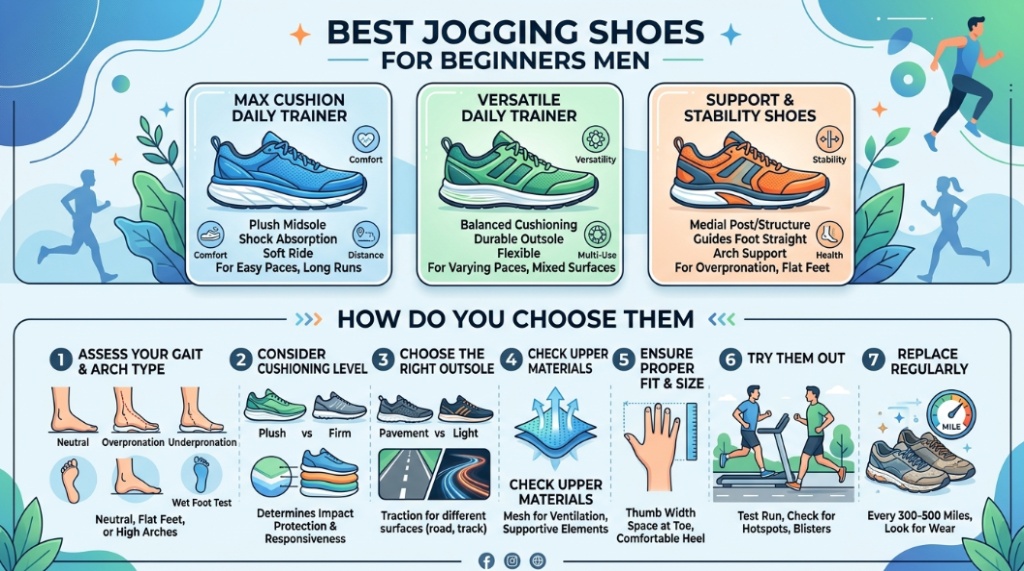
The best jogging shoes for beginners men are lightweight, well-cushioned, properly fitted running shoes that match your foot shape, stride pattern, and training goals. Choosing the right pair reduces injury risk, improves comfort, and helps new runners build consistent habits.
Why Choosing the Right Jogging Shoes Matters for Beginner Runners
Many beginner runners quit within the first few weeks—not because of motivation, but because of discomfort, knee pain, shin splints, or blisters caused by the wrong footwear. Poor shoe selection often leads to avoidable injuries that make jogging feel harder than it should.
Jogging shoes for beginners men are specifically designed to provide cushioning, stability, and support during low- to moderate-impact running. Unlike casual sneakers, they absorb shock, guide foot movement, and reduce strain on joints.
If your shoes don’t match your stride or foot structure, every step adds stress to your ankles, knees, and hips. Over time, this increases the chance of conditions like plantar fasciitis and runner’s knee. The right pair makes running smoother, safer, and more enjoyable from day one.
What Features Should Jogging Shoes for Beginners Men Have?
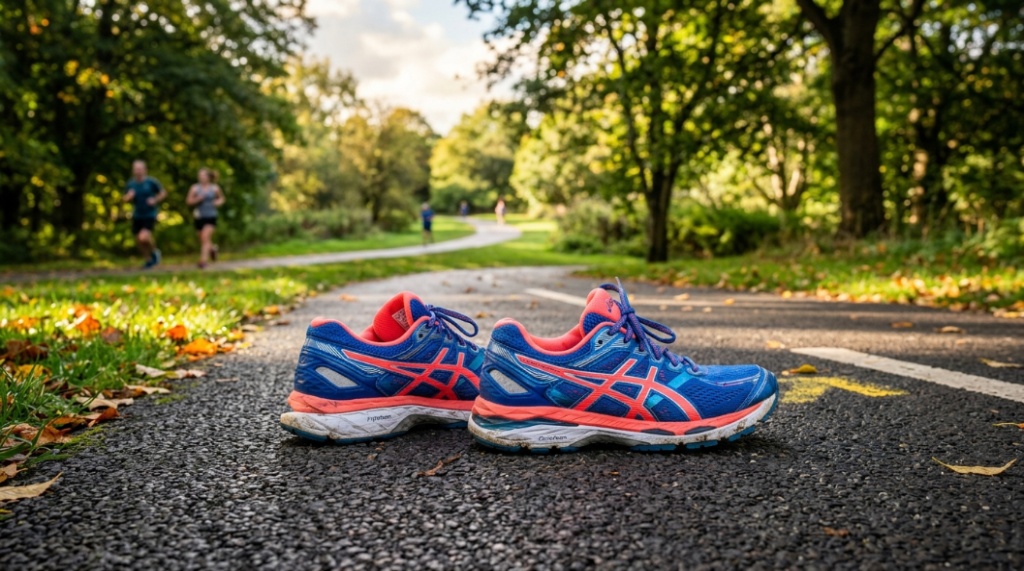
Beginner jogging shoes should provide cushioning, arch support, breathable materials, and a stable midsole to reduce impact and improve comfort during short to moderate runs.
When selecting your first pair, focus on function rather than brand hype. Research from sports medicine studies shows that comfort-based selection significantly reduces injury risk compared to choosing shoes based only on style or price.
Key features to prioritize
- Shock-absorbing midsoles (EVA foam or gel cushioning)
- Breathable mesh uppers
- Moderate heel-to-toe drop (8–12 mm)
- Flexible forefoot movement
- Secure heel lock
- Durable rubber outsole traction
These elements help beginner runners maintain proper running form and reduce fatigue during early training sessions.
How Do You Know Your Foot Type Before Buying Running Shoes?
You can determine your foot type by checking your arch height using a simple wet footprint test or by analyzing wear patterns on old shoes.
Your arch shape affects how your foot absorbs impact. Matching your shoe to your arch prevents overuse injuries and improves stride efficiency.
Three common foot types
- Neutral arch: Balanced pressure distribution; works with most neutral running shoes
- Flat feet: Overpronation tendency; needs stability support
- High arches: Underpronation risk; needs extra cushioning
Many beginner runners skip this step and experience discomfort within weeks. Identifying your foot type early improves long-term training consistency.
What Is Pronation and Why Does It Matter for Beginner Runners?
Pronation describes how your foot rolls inward after landing, and choosing shoes that match your pronation type helps prevent injuries and improves running efficiency.
There are three pronation patterns:
- Neutral pronation: Ideal alignment with balanced impact absorption
- Overpronation: Excess inward roll causing knee and ankle strain
- Supination (underpronation): Outward roll leading to reduced shock absorption
Beginners with overpronation benefit from stability shoes that include medial support structures to control inward movement.
How Much Cushioning Do Beginner Jogging Shoes Need?
Beginner runners should choose moderate cushioning to absorb impact without reducing ground feedback needed for proper running mechanics.
Cushioning protects joints during early adaptation stages when muscles and tendons are still strengthening.
Types of cushioning materials
- EVA foam midsoles for lightweight comfort
- Gel cushioning for shock absorption
- Air-based cushioning systems for responsiveness
- TPU-based midsoles for durability
Studies suggest impact forces during jogging can reach two to three times body weight, making proper cushioning essential for injury prevention.
What Is the Ideal Shoe Weight for Beginner Joggers?
The ideal jogging shoe weight for beginners ranges between 250 and 320 grams, offering a balance between cushioning and mobility.
Heavier shoes increase fatigue over long sessions, while extremely lightweight shoes may lack support for new runners. A moderate-weight design improves endurance without compromising stability.
Should Beginners Choose Stability Shoes or Neutral Running Shoes?
Beginners should choose stability shoes if they overpronate and neutral shoes if their stride remains balanced.
Selecting the correct category reduces stress on joints and improves comfort during training.
| Shoe Type | Best For | Benefits | Limitations |
|---|---|---|---|
| Neutral Shoes | Normal arches | Lightweight, flexible, versatile | Less correction support |
| Stability Shoes | Flat feet / overpronation | Improves alignment | Slightly heavier |
| Motion Control Shoes | Severe overpronation | Maximum support | Reduced flexibility |
How Should Jogging Shoes for Beginners Men Fit Properly?
Jogging shoes should fit snugly around the heel with about a thumb’s width of space in the toe box to prevent blisters and toe injuries.
Improper sizing remains one of the most common mistakes among new runners.
Fit checklist
- No heel slipping
- Comfortable midfoot wrap
- Toe movement space
- No pressure points
- Secure lacing support
Feet naturally swell during runs, so testing shoes in the evening often results in better sizing accuracy.
What Heel Drop Is Best for Beginner Runners?
A heel drop between 8 and 12 mm works best for beginner runners because it supports natural stride transitions and reduces Achilles tendon strain.
Higher heel drops reduce calf stress, making them ideal for runners transitioning from walking or casual footwear.
Are Expensive Running Shoes Necessary for Beginners?
Beginners do not need expensive shoes; mid-range running shoes typically provide enough cushioning and durability for early training stages.
Performance differences between mid-tier and premium models are minimal for new runners covering shorter weekly distances.
Focus on:
- Comfort
- Support
- Fit
- Durability
These factors matter more than advanced performance technologies at the beginner level.
Which Materials Improve Breathability and Comfort in Jogging Shoes?
Breathable mesh uppers improve airflow, reduce sweat buildup, and help prevent blisters during jogging sessions.
Modern engineered mesh fabrics allow flexibility while maintaining structure around the midfoot.
Look for:
- Lightweight mesh uppers
- Moisture-wicking linings
- Padded collars
- Ventilated toe boxes
These features improve comfort during warm-weather training.
How Often Should Beginners Replace Jogging Shoes?
Beginners should replace jogging shoes every 500 to 800 kilometers or when cushioning visibly compresses.
Worn-out midsoles lose shock absorption capability, increasing injury risk.
Signs your shoes need replacement
- Uneven outsole wear
- Reduced cushioning feel
- Heel instability
- Persistent soreness after runs
What Mistakes Should Beginner Runners Avoid When Buying Shoes?
Beginner runners should avoid choosing shoes based on style, brand popularity, or incorrect sizing rather than comfort and biomechanical fit.
- Buying lifestyle sneakers instead of running shoes
- Ignoring arch type
- Choosing tight toe boxes
- Selecting ultra-minimal shoes too early
- Skipping in-store walking tests
A comfort-first approach consistently leads to better long-term results.
Which Running Surfaces Affect Shoe Selection the Most?
Road surfaces require cushioned road-running shoes, while trails require grip-focused trail-running shoes with reinforced outsoles.
Most beginners jog on pavement, sidewalks, or parks. Road-running shoes remain the safest starting option.
Surface-specific selection improves traction and reduces slip-related injuries.
Are Brand Differences Important for Beginner Running Shoes?
Brand differences matter less than fit and comfort, but established running brands invest heavily in biomechanical testing and cushioning technology.
Companies like ASICS, Brooks, New Balance, Saucony, and Nike produce beginner-friendly models designed for injury prevention and comfort.
Trying multiple brands improves the chance of finding the best match for your stride.
Conclusion: How Can the Right Jogging Shoes Help Beginner Runners Stay Consistent?
The right jogging shoes for beginners men provide cushioning, stability, proper fit, and breathable comfort that reduce injury risk and improve training consistency. Choosing footwear based on arch type, pronation pattern, and running surface creates a strong foundation for long-term progress.
Instead of focusing on brand hype or price, prioritize comfort testing, moderate cushioning, and correct sizing. These factors directly influence motivation and performance during the first months of running.
If you’re starting a jogging routine this year, investing time in selecting the right shoes may be the single most important step you take toward building a sustainable running habit.
FAQ: Common Questions About Jogging Shoes for Beginners Men
Can beginners use walking shoes for jogging?
No, walking shoes lack the cushioning and impact protection required for jogging and may increase injury risk during repeated running movements.
Should beginner runners buy wide-fit jogging shoes?
Wide-fit jogging shoes are necessary only if your forefoot feels compressed or your toes lack movement space inside standard-width shoes.
Is it better to buy jogging shoes online or in-store?
In-store purchases allow gait testing and fit evaluation, making them safer for beginners than online-only selection.
How tight should jogging shoes feel when new?
Jogging shoes should feel secure but never restrictive, with enough toe room to prevent friction during longer runs.
Do beginner runners need separate shoes for treadmill running?
No, standard road-running shoes work well on treadmills because the cushioning requirements remain similar.
Can the wrong running shoes cause knee pain?
Yes, improper arch support and poor cushioning alignment can increase stress on knee joints and lead to discomfort over time.
How long do beginner jogging shoes usually last?
Most beginner jogging shoes last between four and six months depending on running frequency and surface conditions.
Read More Also Try flat waves on your hair
Discover MoreHow to hide gray hair without dye
About Author