
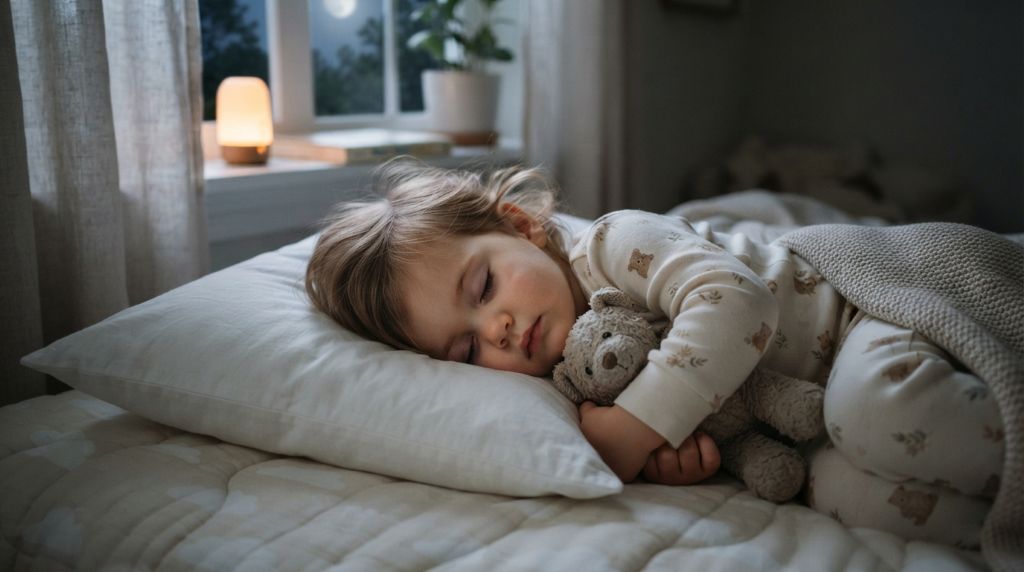
My toddler used to wake up drenched in sweat, tangled in her blanket, and furious about it. I tried more blankets, fewer blankets, and everything in between. Nothing worked until I learned to dress her based on the actual room temperature instead of guessing, thanks to ProBabyGuide.
Getting toddler sleepwear right feels confusing at first. However, once you understand a few simple guidelines, it becomes second nature. This guide walks you through exactly how to dress your toddler for sleep, no matter the season.
Why Temperature Matters for Toddler Sleep
Toddlers cannot regulate their body temperature as well as adults. Their bodies lose and gain heat faster, which makes overheating and chilling more likely. Getting the balance right supports safer, longer sleep.
Overheating carries real risks. According to the American Academy of Pediatrics’ safe sleep guidance, keeping a child’s sleep environment cool and avoiding excess layers helps reduce the risk of overheating during sleep, which remains a safety concern well beyond infancy. While this guidance is written primarily for babies, the underlying principle still applies to toddlers.
On the other end, a toddler who feels too cold may wake frequently or struggle to fall asleep at all. Cold hands and feet do not always mean your toddler is cold overall. Instead, check their chest or the back of their neck for a more accurate read.
Room temperature and clothing work together. A toddler dressed too warmly in a hot room faces more risk than one dressed appropriately in a cooler space. Therefore, always consider both factors together rather than focusing on clothing alone.
Additionally, toddlers move more during sleep than infants. They kick off blankets, shift positions, and sometimes end up on top of their covers entirely. This unpredictability is exactly why appropriate sleepwear matters so much. Clothing stays in place, but blankets do not.
Ideal Room Temperature for Toddler Sleep
Most sleep experts recommend keeping a toddler’s bedroom between 68 and 72 degrees Fahrenheit, which equals roughly 20 to 22 degrees Celsius. This range feels comfortable for a lightly dressed adult, and it works well for toddlers too.
A simple rule many pediatric sources recommend is dressing your toddler in about one extra layer compared to what an adult would wear comfortably in the same room. This approach removes the guesswork and adjusts naturally with the seasons.
Use a room thermometer if possible. Guessing by feel can be unreliable, especially in rooms with poor insulation or inconsistent heating. A small thermometer placed away from windows and heating vents gives an accurate reading.
Seasonal changes matter too. During summer, a fan or air conditioning can help maintain a comfortable range. During winter, a space heater used safely and away from the crib or bed can prevent the room from getting too cold overnight.
However, avoid extreme temperature swings between rooms. If your toddler naps in a warmer living room but sleeps in a cooler bedroom, adjust their clothing layer between the two. Consistency helps their body settle into sleep more easily.
Finally, remember that every child is slightly different. Some toddlers naturally run warmer or cooler than others. Pay attention to your own child’s patterns over a few nights, and adjust the guidelines slightly if needed.
How to Layer Clothing by Temperature
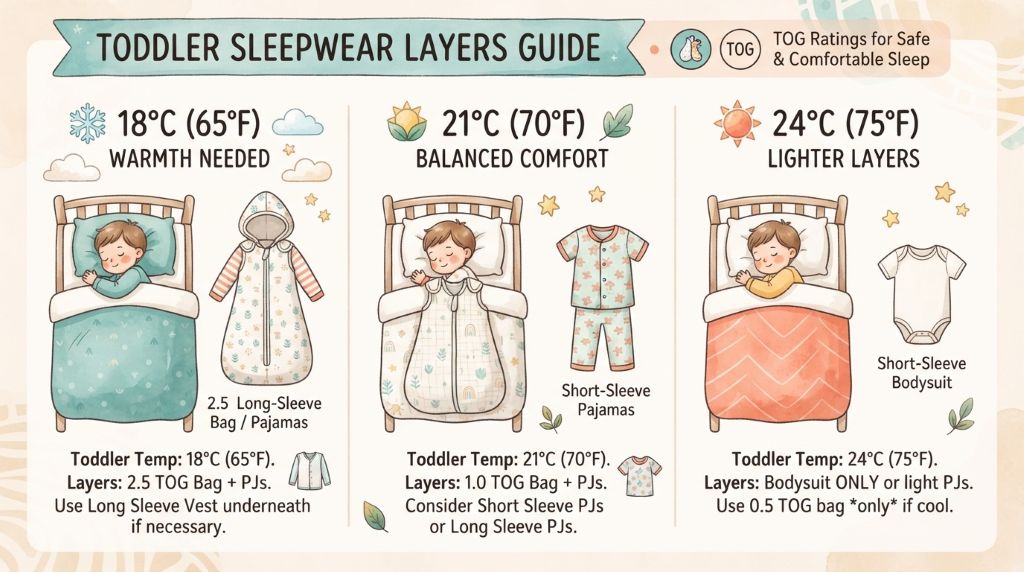
Once you know the room temperature, choosing the right layers becomes simple. Use this general guide as a starting point:
- Above 75°F: A short-sleeve bodysuit or light cotton pajamas alone
- 72–75°F: Lightweight cotton pajamas, no additional layer needed
- 68–72°F: Cotton pajamas with a lightweight sleep sack or wearable blanket
- 65–68°F: Fleece or thicker pajamas with a mid-weight sleep sack
- Below 65°F: Warm pajamas with a heavier sleep sack, plus socks if needed
Natural fabrics like cotton and bamboo breathe better than synthetic materials. They help regulate body temperature more effectively throughout the night. Avoid heavy fleece unless the room genuinely runs cold.
For toddlers over 12 months, a light blanket becomes an option, according to updated guidance summarized by the Sleep Foundation. However, many parents continue using sleep sacks well into the toddler years simply because they stay in place better than loose blankets.
Additionally, avoid overdressing “just in case.” Extra layers added out of caution often backfire, leading to overheating and disrupted sleep. Trust the temperature guide, then check on your toddler once to confirm comfort.
Seasonal transitions require extra attention. As temperatures shift in spring and fall, check the room temperature more frequently. A single degree change can matter more than you expect for a small body.
Signs Your Toddler Is Too Hot or Too Cold
Reading your toddler’s signals matters as much as any thermometer. Learn to spot the physical signs of discomfort during sleep.
Signs of overheating include:
- Sweating, especially around the neck or hairline
- Flushed or red cheeks
- Damp hair
- Rapid breathing
- Restlessness or frequent waking
Signs of being too cold include:
- Cool chest or torso to the touch
- Pale skin
- Shivering
- Curling into a tight ball while sleeping
- Waking up crying without an obvious reason
Check your toddler’s chest or the back of their neck rather than their hands and feet. Hands and feet often feel cool naturally, even when the rest of the body feels comfortable. This is a common mistake among new parents.
If you notice signs of overheating, remove a layer immediately and check the room temperature. Similarly, if your toddler feels cold, add one light layer rather than piling on multiple blankets at once. Small adjustments work better than drastic changes. Choosing breathable, gentle fabrics can also make nighttime dressing more comfortable, and bamboo baby clothes- soft, gentle, and wonderfully sustainable can be a practical option for sensitive skin.
Over time, you will learn your toddler’s specific patterns. Some children naturally run warmer during illness or teething, which temporarily shifts their comfortable range. Stay flexible, and adjust based on what you observe each night.
Common Mistakes Parents Make
Even well-meaning parents make small errors when dressing toddlers for sleep. Avoiding these mistakes can improve sleep quality significantly.
First, many parents rely on loose blankets for temperature control. However, blankets can bunch up, slip off, or end up covering the face. A sleep sack or wearable blanket solves this problem far more safely.
Second, hats are often unnecessary indoors. Toddlers lose a significant amount of heat through their head, but a warm room rarely requires head coverings during sleep. Overheating from hats is a more common issue than most parents realize.
Third, parents sometimes ignore room temperature entirely and focus only on clothing. As discussed earlier, both factors work together. Dressing warmly in an already warm room creates unnecessary discomfort.
Fourth, synthetic fabrics trap heat more than natural fibers. Polyester fleece feels cozy, but it does not breathe well. Reserve heavier synthetic layers for genuinely cold rooms only.
Finally, avoid guessing based on outdoor weather alone. Indoor heating and cooling systems often create a very different climate than what is happening outside. Always check the actual room temperature before choosing pajamas for the night.
Conclusion
Dressing your toddler for sleep does not require perfection, just attention. Check the room temperature, choose breathable layers, and watch for physical signs of comfort or discomfort. Small adjustments make a big difference in how well your toddler sleeps.
Trust the guidelines, but also trust what you observe in your own child. Every toddler is a little different, and your instincts matter too.
Frequently Asked Questions
What temperature is too cold for a toddler’s room?
Below 65°F often feels too cold without extra layers. Add warmer pajamas and a heavier sleep sack, and check your toddler’s chest for warmth.
Should toddlers wear socks to bed?
Socks are optional and mainly useful in colder rooms. Cold hands and feet alone do not mean your toddler is too cold overall.
Is it safe to use a blanket for a toddler over one year old?
Yes, most guidelines consider light blankets safe after 12 months. However, many parents still prefer sleep sacks since they stay in place better.
How do I know if my toddler is overheating at night?
Look for sweating, flushed cheeks, damp hair, or rapid breathing. Remove a layer and recheck the room temperature if you notice these signs.
Can I use a fan in my toddler’s room?
Yes, a fan can help maintain a comfortable temperature during warmer months. Keep it at a safe distance and never point it directly at your toddler.
About Author