
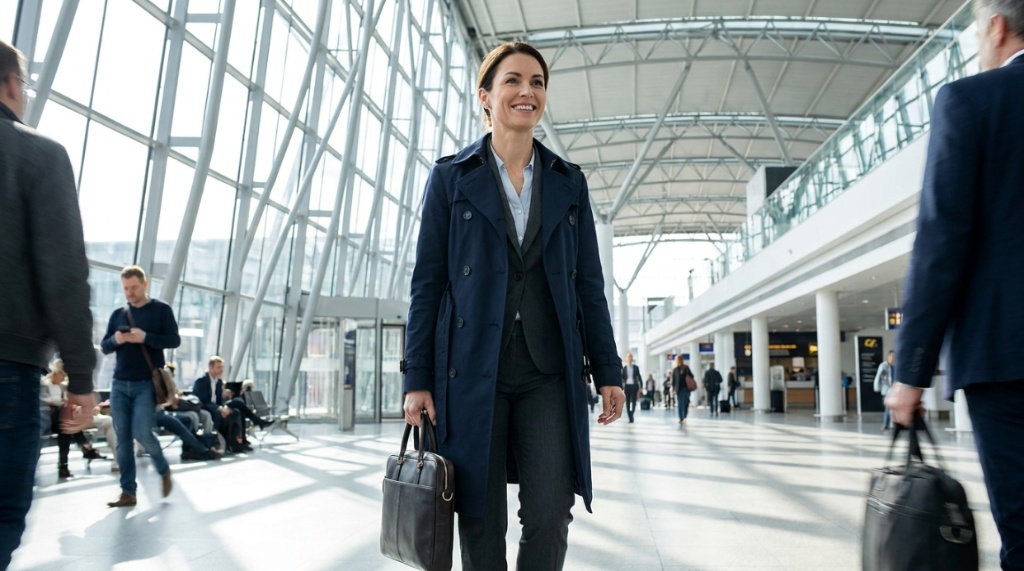
A senior account manager at a Manhattan agency used to haul a 22-pound bag to work every day — laptop, backup charger, three notebooks, full makeup kit, gym shoes, two water bottles, and “just in case” items she hadn’t touched in months. Her shoulder ached by noon. Her bag looked like an overstuffed suitcase. And none of it made her more productive. The day she switched to a curated 8-pound carry in a structured travel work bag, three things happened: her shoulder pain disappeared, she looked more polished walking into meetings, and she actually found things faster because everything had a purpose. Traveling light for work isn’t about deprivation — it’s about intentional curation that makes you faster, more comfortable, and more professional simultaneously.
The average professional commuter carries 4–6 pounds of items they don’t use on any given day, according to a 2024 ergonomics study by Cornell University. That dead weight causes cumulative shoulder strain, makes bags bulge unprofessionally, and slows down every transition between locations. Learning to travel light while maintaining workplace style is a skill that compounds daily — saving you physical discomfort, time, and the mental load of managing unnecessary possessions. Here’s the complete framework for building a minimal, stylish work carry that handles everything your day demands and nothing it doesn’t — using the right travel work bags and smart packing strategies.
What Does “Traveling Light” Actually Mean for Work Commuters?
Traveling light for work means carrying only items you use daily (not “might need”), keeping total bag weight under 10 pounds loaded, and choosing multi-purpose items that serve two or three functions each.
The light travel framework:
- Essential carry (must have daily): Laptop, phone, wallet, keys, one charger. These go in the bag every day without question.
- Conditional carry (needed some days): Notebook, umbrella, lunch, specific documents. Include only on days you’ll actually use them.
- Eliminated carry (never needed daily): Backup chargers, multiple notebooks, full cosmetics kit, “just in case” items. Remove permanently.
Weight targets:
- Ultra-light (under 6 lbs total): Laptop + phone + wallet + keys + single charger. Possible with a 13″ laptop and slim bag.
- Light (6–10 lbs total): Above + notebook + lunch + umbrella. Comfortable for any commute length.
- Standard (10–15 lbs total): Above + gym clothes or extra items. Maximum for comfortable daily carry.
- Overloaded (15+ lbs): Causes shoulder/back strain on commutes over 20 minutes. Requires immediate reduction.
How Do You Reduce Bag Weight Without Losing Functionality?
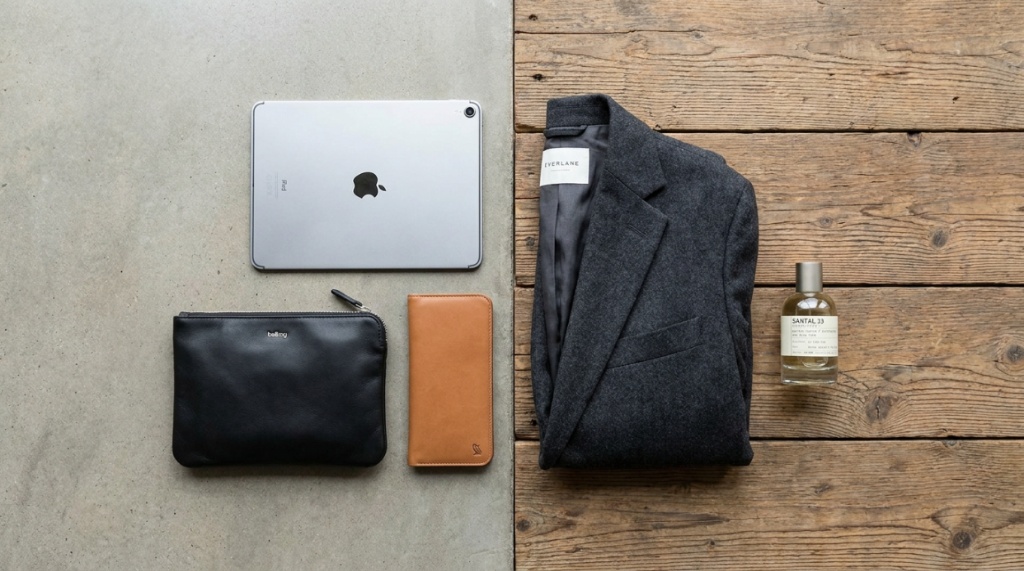
Replace heavy single-purpose items with lightweight multi-purpose alternatives, digitize everything possible, and audit your bag weekly to remove items that haven’t been used in 5+ days.
Weight reduction swaps:
| Heavy Item | Weight | Light Alternative | Weight | Savings |
|---|---|---|---|---|
| Full-size umbrella | 1.2 lbs | Compact travel umbrella | 0.5 lbs | 0.7 lbs |
| Paper notebook + planner | 1.0 lbs | Phone/tablet notes app | 0 lbs | 1.0 lbs |
| Laptop + tablet | 5.5 lbs | Laptop only (tablet tasks on phone) | 3.5 lbs | 2.0 lbs |
| Multiple chargers | 1.5 lbs | One GaN multi-port charger | 0.4 lbs | 1.1 lbs |
| Full water bottle (32oz) | 2.5 lbs | Collapsible bottle (fill at office) | 0.2 lbs | 2.3 lbs |
| Heavy leather bag (empty) | 3.5 lbs | Lightweight nylon bag (empty) | 1.5 lbs | 2.0 lbs |
Total potential savings from these swaps alone: 9.1 lbs. That’s the difference between a comfortable commute and chronic shoulder pain.
What Travel Work Bag Styles Look Professional While Staying Light?
Slim structured backpacks, minimalist messenger bags, and lightweight briefcases in premium materials maintain professional appearance at half the weight of traditional leather bags — typically 1.5–2.5 lbs empty vs. 3.5–5 lbs for leather equivalents.
Lightweight professional bag options:
- Technical fabric backpack (1.5–2.5 lbs): Brands like Aer, Bellroy, and Away use premium nylon that looks professional while weighing 50% less than leather. Clean designs read as intentional, not cheap.
- Slim messenger (1.0–2.0 lbs): Minimalist crossbody bags from Bellroy or Waterfield hold a laptop and essentials in under 2 lbs of bag weight. Perfect for light carriers.
- Lightweight briefcase (1.5–2.5 lbs): Nylon or canvas briefcases from Filson or Tumi offer professional structure without leather weight. Ideal for corporate environments.
- Packable tote (0.5–1.0 lbs): For ultra-light days, a structured nylon tote holds a laptop sleeve and minimal essentials. Folds flat when empty.
The style principle: lightweight doesn’t mean cheap-looking. Premium technical fabrics (Cordura, ballistic nylon, recycled woven) in dark colors with clean hardware look equally professional as leather — and increasingly more modern.
How Do You Maintain Professional Style with a Minimal Carry?
Professional style with minimal carry comes from three principles: structured bag shape (never saggy), coordinated color palette (bag matches shoes and belt), and quality over quantity in every item you carry.
Style rules for light travelers:
- Bag structure matters more when carrying less: A half-empty unstructured bag looks sloppy. Choose bags with internal frame sheets that maintain shape regardless of contents.
- Color coordination: Match your bag to your shoe color family (black bag/black shoes, brown bag/brown shoes). This single rule makes any outfit look intentional.
- Minimal external items: Nothing dangling from zippers, no visible carabiners, no water bottle sticking out the top. Clean exterior = professional appearance.
- Quality accessories visible: Your pen, notebook cover, and phone case are visible when you open your bag in meetings. Make them cohesive and quality.
- Bag condition: A lightweight bag in perfect condition looks more professional than an expensive bag showing wear. Lighter bags are easier to maintain.
What’s the Ideal Daily Carry List for a Stylish Light Traveler?
The ideal light carry for a professional workday contains exactly 8–12 items totaling under 8 lbs — each item serving a clear daily purpose with no redundancy or “just in case” additions.
The curated professional carry:
- Laptop (3–4 lbs): Your primary work tool. Consider whether a lighter model (MacBook Air vs. Pro) meets your needs.
- GaN charger with integrated cable (0.4 lbs): One charger for laptop and phone. Eliminates carrying separate chargers.
- Phone: Already in your pocket. Replaces notebook, calculator, camera, and music player.
- Slim wallet (0.1 lbs): Cards and minimal cash only. Ditch the bulky bifold.
- Keys (0.1 lbs): Only keys you use daily. Remove gym fobs, old keys, and decorative keychains.
- Compact umbrella (0.5 lbs): Only on days with rain forecast. Leave at office otherwise.
- Slim notebook or tablet (0.5–1.0 lbs): For meetings where typing is inappropriate. One thin notebook, not a full planner.
- Quality pen (0.05 lbs): One good pen. Not three mediocre ones.
- Wireless earbuds (0.1 lbs): For commute and calls. Replaces over-ear headphones (saves 0.5 lbs).
- Collapsible water bottle (0.2 lbs empty): Fill at office. Flat when empty.
Total weight: 5–7 lbs. Total items: 10. Everything serves a daily purpose. Nothing is redundant.
How Do You Handle Days That Require More Gear?
Use a modular system: keep your daily bag minimal and add a secondary packable bag only on days requiring gym clothes, presentation materials, or travel items — rather than carrying a larger bag every day “just in case.”
Modular strategies:
- Gym days: Keep a separate gym bag at your locker or use a packable duffel that fits inside your main bag when empty. Don’t carry gym shoes in your work bag daily.
- Presentation days: Add a slim document portfolio for printed materials. Carries flat against your laptop.
- Travel days: Use a bag with expandable compartment or luggage pass-through. Expand only when needed.
- Client meeting days: Swap your backpack for a briefcase-style carry. Keep both options and choose based on the day’s schedule.
The key insight: design your daily carry for your most common day (80% of workdays), not your most demanding day. Handle the 20% of unusual days with modular additions rather than permanent over-packing.
Streamlining your packing list is the absolute secret to stress-free transit, whether you are heading into a high-stakes board meeting or jetting off for a weekend getaway. Knowing how to pack efficiently ensures you can seamlessly transition from the airport terminal straight to your afternoon meetings. Of course, this minimalist mindset doesn’t just apply to corporate trips; finding the right lightweight gear makes casual holidays easier too. If you are planning a family vacation or helping a younger traveler pack for the coast, matching this streamlined look with the Perfect Beach Bags for Teenage Girls ensures everyone in the family stays organized and stylish on the go.
What Tech Accessories Help You Travel Lighter?
A GaN multi-port charger, wireless earbuds, cloud storage, and a phone with good camera eliminate 3–5 separate devices and save 2–4 lbs of daily carry weight.
Tech consolidation for lighter carry:
- GaN charger (replaces 2–3 chargers): One 65W+ GaN charger with USB-C handles laptop, phone, and tablet. Saves carrying separate chargers. Weight: 0.3–0.5 lbs vs. 1.5 lbs for multiple chargers.
- Wireless earbuds (replaces headphones): AirPods Pro or equivalent weigh 0.1 lbs vs. 0.5–0.8 lbs for over-ear headphones. Noise cancellation included.
- Cloud storage (replaces USB drives and documents): Access everything from any device. Zero physical weight. Eliminates carrying printed documents “just in case.”
- Phone camera (replaces point-and-shoot): Modern phones shoot professional-quality photos and video. No separate camera needed for work documentation.
- Digital business cards (replaces card holder): NFC-enabled digital cards or LinkedIn QR code eliminate carrying physical business cards.
How Do Frequent Travelers Maintain Light Carry Across Multiple Days?
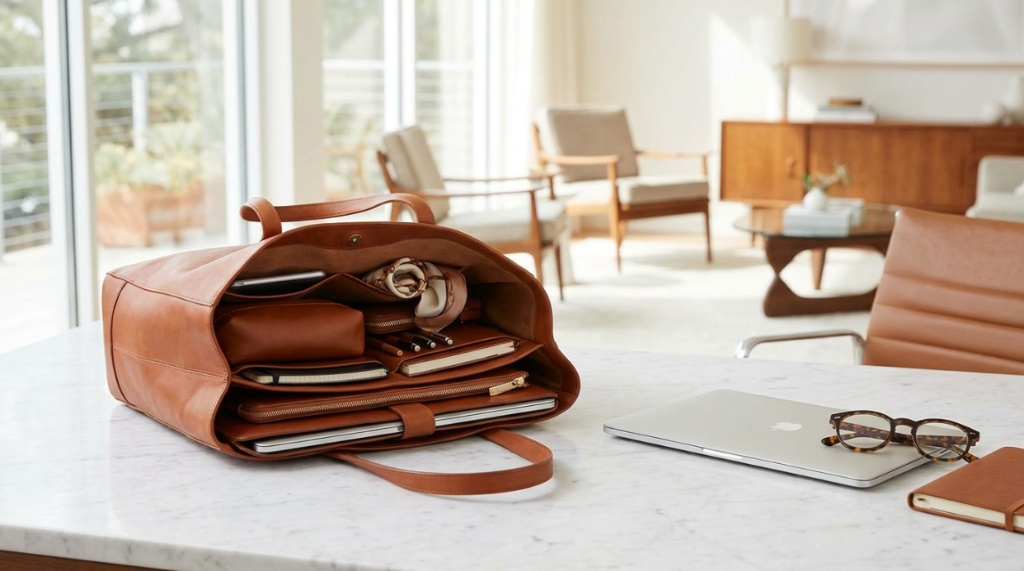
Frequent travelers maintain light carry by wearing their heaviest items (jacket, boots), using hotel laundry for multi-day trips, and choosing wrinkle-resistant fabrics that pack small and look professional without ironing.
Multi-day light travel principles:
- Wear, don’t pack: Your heaviest jacket and shoes go on your body during transit, not in your bag.
- Merino wool base layers: Naturally odor-resistant, wrinkle-resistant, and temperature-regulating. One shirt handles 2–3 days without washing.
- Packing cubes: Compress clothing 30–40% and keep your bag organized. A $20 investment that transforms packing efficiency.
- Hotel laundry strategy: For trips over 3 days, pack for 3 days and use hotel laundry. Eliminates packing for the full trip length.
- Toiletry minimalism: Solid shampoo/conditioner bars, multi-use products (tinted moisturizer with SPF), and hotel-provided basics reduce toiletry weight by 60%.
Conclusion
Traveling light for work isn’t about carrying less — it’s about carrying smarter. Every item in your bag should earn its space through daily use, not hypothetical future need. The professionals who look most polished and move most efficiently through their days aren’t the ones with the biggest bags. They’re the ones with curated carries in quality bags that maintain structure and style regardless of how much or how little they contain.
Start by auditing your current bag. Remove everything you haven’t used in the past week. Replace heavy single-purpose items with lightweight multi-purpose alternatives. Choose a bag that looks professional at any fill level. And resist the urge to add things back “just in case.” Within one week of lighter carry, you’ll wonder why you ever hauled unnecessary weight through your daily commute.
What’s the heaviest unnecessary item in your work bag right now? Share in the comments — I’ll suggest a lighter alternative or explain why you can probably eliminate it entirely.
Frequently Asked Questions
How much should a work bag weigh when fully loaded?
Under 10 lbs for comfortable all-day carry. Under 8 lbs is ideal for commutes involving 20+ minutes of walking or standing. If your loaded bag exceeds 12 lbs, you’re carrying unnecessary items that cause cumulative shoulder and back strain over months of daily commuting.
Can you look professional with a lightweight bag?
Absolutely. Premium technical fabrics (Cordura, ballistic nylon) in dark colors with clean hardware look equally professional as heavy leather — and increasingly more modern. The key is structured design that maintains shape, not material weight. A well-designed 1.5 lb nylon bag looks more professional than a saggy 4 lb leather bag.
What should I remove from my work bag first?
Remove anything you haven’t used in the past 5 workdays. Common culprits: backup chargers, multiple notebooks, full cosmetics kits, “just in case” clothing layers, and physical documents available digitally. Most professionals can eliminate 3–5 lbs immediately without affecting their workday.
How do I carry gym clothes without a huge bag?
Three options: keep gym clothes in a locker at your gym, use a separate packable gym bag that compresses flat in your work bag, or wear athletic clothing under work clothes on gym days (works for after-work gym sessions). Never let gym gear dictate your daily bag size.
What’s the lightest laptop for professional work?
The MacBook Air M3 (2.7 lbs) and Dell XPS 13 (2.6 lbs) are the lightest professional-grade laptops. Switching from a 15-inch workstation (4.5+ lbs) to a 13-inch ultrabook saves 2 lbs daily — equivalent to removing a full water bottle from your bag permanently.
Is one charger really enough for a full workday?
Yes. A 65W+ GaN charger with USB-C charges both laptop and phone. Modern laptops last 8–12 hours on a single charge for typical work tasks. Charge your phone during laptop use. One charger, one cable — that’s all you need for a full workday away from your desk.
How do I travel light for multi-day business trips?
Pack for 3 days maximum regardless of trip length. Use hotel laundry for longer trips. Wear your heaviest items during transit. Choose wrinkle-resistant fabrics. Use packing cubes for compression. A 25–30L backpack with smart packing handles 3–5 day business trips without checking luggage.
About Author


