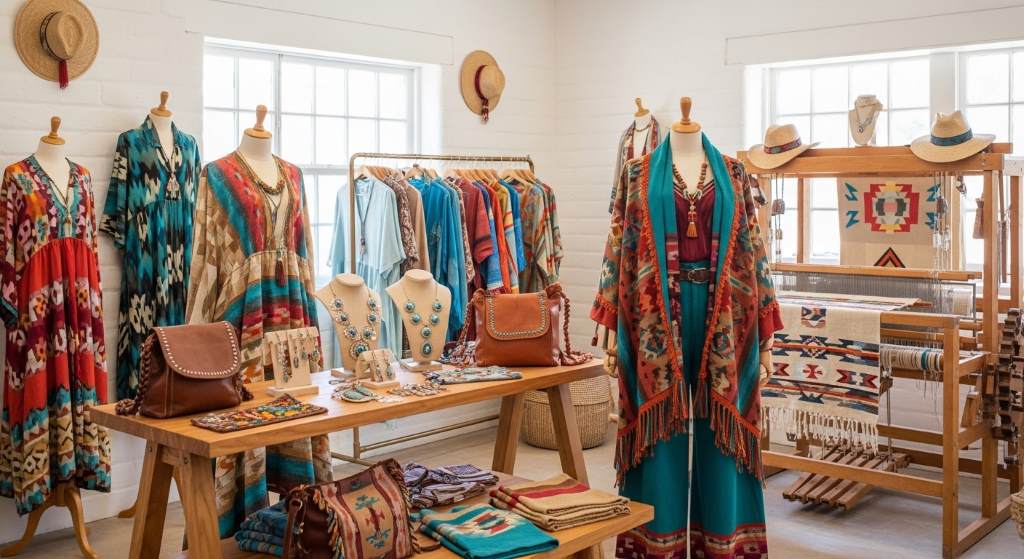
Santa Fe has become one of the most influential fashion centers for handcrafted boho clothing in the American Southwest. According to tourism reports, more than two million visitors explore the city each year, and many shop for artisan fashion inspired by Native and Mexican heritage. Modern buyers now value handmade textures and cultural craftsmanship more than mass-produced trends. As a result, boutiques increasingly blend local weaving traditions with modern silhouettes. Many designers also study traditional mexican textile aesthetics to understand how heritage fabrics can fit contemporary wardrobes. This creative fusion helps Santa Fe boutiques stand apart in the growing boho fashion market.
The Deep Cultural Influence Behind Santa Fe Boho Fashion
Santa Fe fashion reflects centuries of artistic exchange between Native American, Spanish, and Mexican communities. Local boutiques often work with artisans who still use traditional wooden looms and hand-dyeing methods. These fabrics carry symbolic shapes, geometric patterns, and earthy color palettes that connect clothing to regional identity. At the same time, designers reshape these materials into relaxed jackets, flowing dresses, and modern layering pieces.
Many boutique owners focus on preserving craftsmanship instead of chasing fast fashion trends. Therefore, they choose woven materials that age beautifully and develop character over time. Some stores also educate customers about weaving origins through small product tags and storytelling displays. This approach creates emotional value that shoppers rarely find in chain retailers.
Santa Fe’s dry climate also shapes the clothing itself. Lightweight woven cotton and breathable wool blends work well during warm afternoons and cool desert evenings. Designers carefully balance comfort and texture to support year-round wearability. Consequently, local boho fashion feels practical instead of purely decorative.
How Traditional Loom Patterns Shape Modern Boutique Collections
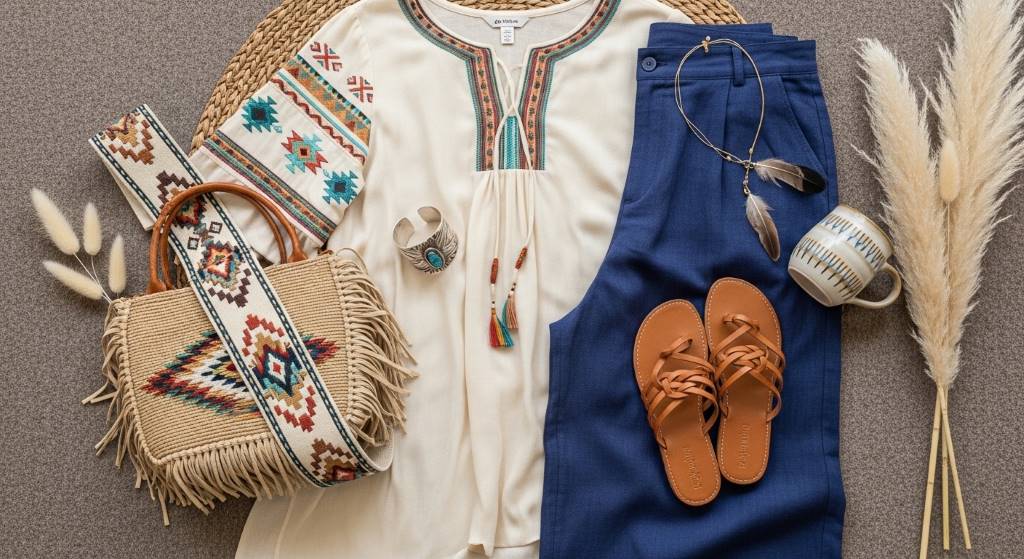
Traditional loom patterns often feature stripes, stepped diamonds, and repeating tribal-inspired geometry. Boutique designers reinterpret these visuals through cleaner cuts and softer silhouettes that appeal to modern buyers. Many garments combine vintage weaving patterns with oversized sleeves, cropped hems, or asymmetrical layers. This blend helps heritage textiles feel current without losing their cultural roots.
Some boutiques now apply tailoring strategies inspired by modern fit trends to balance heavy woven fabrics. For example, shops often use ideas similar to perfect clothing fit tips when designing relaxed boho jackets and ponchos. Proper structure prevents handmade garments from looking bulky or shapeless. As a result, shoppers can enjoy artisan fashion while still achieving polished everyday outfits.
Color selection also plays a major role in this transformation. Traditional textiles commonly include rust, clay, turquoise, ochre, and charcoal tones inspired by the desert landscape. However, boutiques often soften these palettes with cream, muted sage, or dusty pink for broader appeal. This subtle adjustment attracts younger shoppers who prefer minimal boho aesthetics.
Popular Loom-Inspired Garments in Santa Fe Boutiques
- Handwoven cropped jackets with geometric trims
- Fringed shawls made from natural wool blends
- Flowing maxi dresses with woven waist panels
- Oversized cardigans featuring tribal stripe details
- Artisan handbags using recycled textile scraps
These pieces work especially well because they combine statement textures with practical functionality. Most customers prefer versatile items that pair easily with denim, boots, or neutral basics. Therefore, boutiques avoid overly costume-like styling. Instead, they create wearable pieces that blend naturally into modern wardrobes.
The Role of Sustainable Fashion in Santa Fe Boutique Design
Sustainability has become a major reason why shoppers gravitate toward handcrafted boho clothing. Traditional loom production usually creates less waste than industrial textile manufacturing. Many artisans also use natural fibers, plant-based dyes, and small-batch weaving techniques. Consequently, boutiques can market these garments as environmentally conscious alternatives.
Several Santa Fe stores collaborate directly with regional weaving cooperatives. This partnership allows artisans to receive fair compensation while preserving traditional weaving skills. Customers increasingly appreciate knowing exactly who made their garments and how the materials were sourced. That transparency strengthens trust between boutiques and buyers.
Another uncommon yet important practice involves fabric repurposing. Some boutique owners collect leftover woven scraps and transform them into belts, jewelry, or decorative patches. This method reduces waste while adding uniqueness to every item. Since no two fabric pieces match perfectly, customers enjoy wearing clothing that feels truly one of a kind.
Why Santa Fe’s Climate Supports Layered Boho Styling
Santa Fe experiences dramatic temperature shifts between daytime and nighttime throughout much of the year. Because of this climate pattern, layered fashion remains both practical and stylish. Boutiques design collections that allow customers to mix lightweight garments with textured outer layers. This strategy supports comfort without sacrificing visual depth.
Many stores pair woven ponchos with sleeveless dresses or relaxed linen separates for flexible styling. Some boutique stylists also recommend lightweight layering concepts similar to lightweight cover ups evening dresses techniques, even though Santa Fe and Miami have different climates. The focus stays on breathable movement and easy layering rather than heavy seasonal clothing. As a result, shoppers can transition comfortably from sunny afternoons to cool evenings.
Earth-toned shawls and woven dusters remain especially popular during spring and autumn. These pieces provide warmth without excessive weight, which suits the desert environment perfectly. Meanwhile, natural fabrics help regulate body temperature more effectively than synthetic materials. That functionality adds long-term value for customers.
Best Fabrics for Santa Fe Boho Fashion
- Handwoven cotton for breathability
- Light wool blends for evening warmth
- Linen for summer layering
- Natural leather for artisan accessories
- Organic hemp blends for durability
These materials complement the region’s climate while enhancing the textured appearance associated with boho fashion. Designers carefully select fabrics that move naturally and age gracefully over time. Therefore, garments often improve visually after repeated wear. This quality encourages shoppers to keep items longer instead of replacing them quickly.
How Boutiques Blend Heritage With Contemporary Styling
One of the most interesting developments in Santa Fe fashion involves mixing traditional textiles with minimalist modern cuts. Designers increasingly remove unnecessary embellishments and allow woven patterns to become the focal point. This cleaner approach appeals to younger consumers who enjoy understated luxury. It also broadens the reach of Southwestern-inspired fashion beyond tourist markets.
Several boutiques style loom-pattern garments with modern staples like structured boots, monochrome tops, and sleek denim. This contrast prevents boho fashion from feeling overly theatrical or outdated. Instead, heritage fabrics appear sophisticated and adaptable for daily wear. Many shoppers appreciate this balance because it supports both comfort and individuality.
Another unique strategy involves customizing woven garments for different body types. Boutique stylists often adjust belt placement, sleeve volume, or garment length to create flattering proportions. Some stores even recommend silhouette ideas inspired by style satin maxi dress advice when pairing woven tops with flowing skirts or dresses. These personalized styling methods help handmade fashion feel approachable for a wider audience.
The Rising Popularity of Artisan Storytelling in Fashion Retail
Modern shoppers increasingly want emotional connections with the products they purchase. Santa Fe boutiques respond by sharing detailed stories about weaving traditions, artisan families, and textile symbolism. Some stores even display working looms or host live weaving demonstrations inside their retail spaces. This immersive experience turns shopping into cultural exploration.
Customers often remember stories longer than product details alone. Therefore, boutiques use storytelling to create stronger emotional attachment and customer loyalty. A woven jacket becomes more meaningful when buyers understand the symbolism behind its patterns or the history of its craftsmanship. This approach adds lasting value beyond simple aesthetics.
Social media also plays an important role in promoting artisan narratives. Boutique owners frequently post behind-the-scenes weaving footage and artisan interviews online. These videos help customers appreciate the labor involved in handmade textile production. Consequently, shoppers become more willing to invest in higher-quality pieces.
Challenges Santa Fe Boutiques Face When Using Traditional Patterns
Although traditional textiles attract strong interest, boutiques must navigate cultural sensitivity carefully. Responsible designers avoid copying sacred Indigenous symbols without permission or context. Instead, many collaborate directly with local artisans and compensate them fairly for their contributions. This respectful approach protects cultural integrity while supporting economic sustainability.
Pricing also presents challenges for smaller boutiques. Handmade woven garments require significantly more labor than factory-made clothing. Therefore, many customers initially hesitate when they compare prices with fast fashion retailers. Boutique owners must explain the craftsmanship, durability, and ethical production methods behind each item.
Supply limitations create another obstacle for growing brands. Since artisans often produce fabrics by hand in small batches, inventory quantities remain limited. However, many shoppers actually value this exclusivity because it increases the uniqueness of their purchases. Limited production ultimately strengthens the boutique appeal.
Future Trends in Santa Fe Boho Fashion
Santa Fe boutiques continue experimenting with innovative ways to modernize traditional weaving aesthetics. Some designers now integrate recycled denim, organic cotton, and eco-friendly leather into woven collections. Others blend Southwestern patterns with Scandinavian minimalism or Japanese-inspired layering. These unexpected combinations create fresh visual identities while honoring traditional craftsmanship.
Technology also supports growth within the artisan fashion market. Boutique owners increasingly use virtual styling appointments and online storytelling videos to reach broader audiences. Customers from other states can now explore handcrafted collections without visiting Santa Fe physically. This digital expansion helps preserve weaving traditions through wider commercial support.
Younger consumers will likely continue driving demand for ethical and culturally meaningful fashion. As fast fashion loses appeal among environmentally conscious shoppers, handcrafted textile clothing may gain even greater popularity. Santa Fe boutiques already stand in a strong position because they combine sustainability, artistry, and regional identity so effectively.
Conclusion
Santa Fe boutiques have transformed traditional loom patterns into wearable modern boho fashion without losing their cultural depth. By combining artisan craftsmanship with contemporary styling, these stores create clothing that feels authentic, sustainable, and practical for everyday life. Their success comes from respecting heritage while adapting designs for modern consumers and desert climates. If you want clothing with personality, history, and long-term value, exploring Santa Fe’s woven fashion scene offers a refreshing alternative to mass-produced trends. Start discovering artisan-inspired boho looks today and support the craftsmanship that keeps these traditions alive.
FAQs
Why are loom patterns popular in Santa Fe fashion?
Loom patterns connect modern clothing with the cultural history and artisan traditions of the Southwest.
What fabrics work best for Santa Fe boho outfits?
Light wool, woven cotton, linen, and hemp blends work best because they suit the desert climate.
Are handmade woven garments durable?
Yes, handcrafted woven garments often last longer because artisans use stronger natural fibers and careful weaving methods.
How do boutiques modernize traditional textile patterns?
Boutiques use contemporary silhouettes, softer colors, and minimalist styling to update heritage fabrics.
Can boho woven clothing work for everyday outfits?
Yes, many woven pieces pair easily with denim, boots, neutral tops, and modern layering basics.
About Author