

Getting dressed should feel easy. However, many people struggle with one common problem — finding clothes that fit just right. The goal is simple: not too tight, not too baggy. That sweet spot changes everything about how you look and feel. This guide will walk you through everything you need to know to dress with confidence every single day.
Why Fit Is the Foundation of Great Style
You can own the most expensive clothes in the world. But if they do not fit well, they will not look good. Fit is the single most important element of dressing well. It does not matter if you shop at a luxury boutique or a budget store. A well-fitting outfit always wins.
When clothes fit properly, they highlight your best features. They make you look put-together without trying too hard. Additionally, the right fit makes you feel more comfortable throughout your day. You move freely, you breathe easily, and you carry yourself with more confidence.
Therefore, before you think about colors, patterns, or trends, think about fit first. Everything else comes after.
Understanding What “Good Fit” Actually Means
Good fit does not mean skin-tight. It also does not mean oversized and shapeless. It means the garment follows the natural lines of your body without pulling, bunching, or hanging off you awkwardly.
Here are a few signs that something fits well:
- Shoulder seams sit exactly at the edge of your shoulders, not hanging off them
- There is no pulling or gaping across the chest or back
- You can move your arms freely without the fabric straining
- Trousers sit at your natural waist or hip without digging in
- Sleeves end at the right point on your wrist or arm
When you try something on, move around. Sit down. Reach up. If the fabric protests, it does not fit. Good fit allows full movement without drama.
The Most Common Fit Mistakes People Make
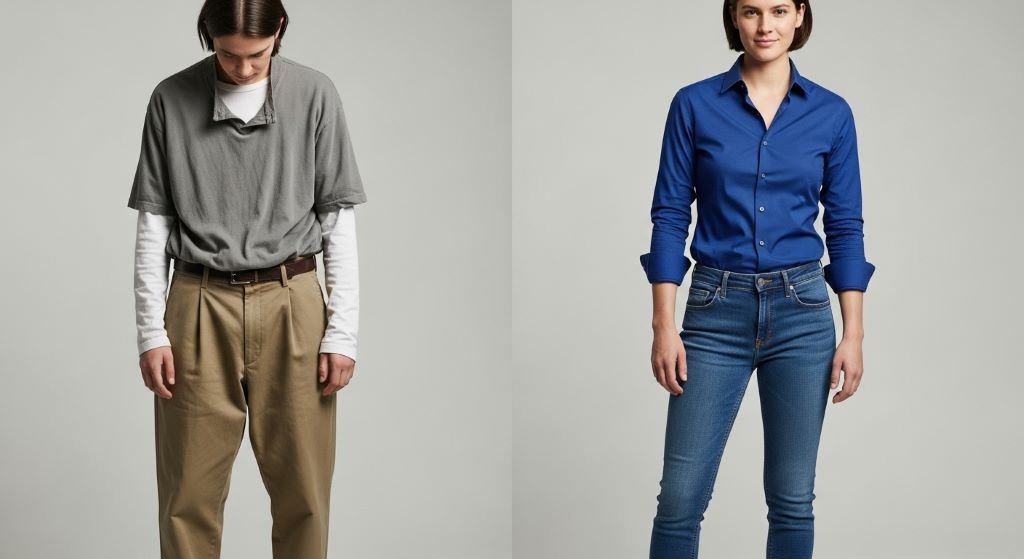
Many people lean toward one of two extremes. They either buy clothes that are too tight because they think it looks slimmer, or they buy clothes that are too big because they think it looks relaxed. However, both extremes tend to have the opposite effect.
Clothes that are too tight draw attention to areas you may want to minimize. They also look uncomfortable, which makes the whole outfit feel strained. On the other hand, clothes that are too baggy hide your shape entirely. They can make you look larger than you are and give the impression of not caring about your appearance.
The balanced approach always looks better. A slightly relaxed fit through the body, with a defined shoulder and a clean hem, reads as intentional and stylish.
How to Find Your Perfect Fit for Tops
Tops are often where fit goes wrong first. Therefore, pay close attention when trying on shirts, blouses, sweaters, and jackets.
The shoulder is your starting point. If the shoulder seam sits correctly, everything else becomes easier to adjust. A tailor can take in the sides or shorten the hem. However, fixing a shoulder seam is expensive and complicated. So always prioritize the shoulder fit above everything else.
For the body of the top, aim for about one to two inches of ease. This means there should be a little room, but not too much. When you pinch the fabric at your side, you should get a small fold. If you get a large bunch of extra fabric, it is too big. If you cannot pinch anything at all, it is too small.
The hem of a shirt should fall just below the waistband of your trousers or skirt. This creates a clean line and keeps the proportions balanced.
How to Find Your Perfect Fit for Bottoms
Trousers, jeans, and skirts each have their own fitting rules. However, the core principle stays the same across all of them.
The waist should sit comfortably without a belt doing all the work. If you constantly need a belt just to keep trousers up, they are too big in the waist. Conversely, if you have to suck in to button them, they are too small.
The seat is another critical area. There should be enough room to sit down comfortably, but not so much that the fabric sags and bunches behind you. A saggy seat adds visual bulk and looks untidy.
For trouser length, the hem should graze the top of your shoe with a slight break. This is the most classic and versatile length. If the trousers pool heavily around your feet, they are too long. If they end mid-shin, they can look awkward unless that is the intended style.
Skirts and dresses should allow you to walk and climb stairs without restriction. Additionally, they should not ride up when you move. If they do, they are too tight across the hips or thighs.
How to Dress for Your Body Shape
Every body is different, and that is a good thing. Understanding your proportions helps you choose cuts and silhouettes that work with your body rather than against it.
If you have broad shoulders, look for tops with a V-neck or a softer neckline. This draws the eye inward and creates balance. Avoid heavy shoulder details or stiff structured shoulders that add more width.
If you have narrow shoulders, a slightly structured shoulder in a jacket or blazer adds definition. Boat necks and wide necklines also help create the appearance of width.
If you carry more weight around your middle, an A-line silhouette works beautifully. It skims past the midsection and creates a smooth line from the chest to the hem. Avoid clingy fabrics in this area, as they will show rather than smooth.
If you have a straight silhouette with few defined curves, you can create the illusion of shape. Wrap styles, belted pieces, and clothing with waist seaming all help define the waist and create more dimension.
The Role of Fabric in How Clothes Fit
Fabric matters more than most people realize. A well-cut garment in a poor-quality or wrong-weight fabric will not fit as well as it should.
Structured fabrics like wool, denim, and thick cotton hold their shape. They are forgiving on the body and drape cleanly. These are great for trousers, blazers, and structured tops.
Soft, drapey fabrics like silk, rayon, and jersey fall against the body more closely. They show more of your shape. Therefore, fit is even more important with these materials. If something pulls or clings in a drapey fabric, go up a size.
Stretch fabrics like elastane blends are forgiving and comfortable. However, be careful not to go too small just because the fabric stretches. Overstretched fabric looks shiny and strained, which is not a good look.
When and How to Use a Tailor
A tailor is one of the best investments you can make in your wardrobe. Many people think tailoring is only for expensive suits. In reality, even a budget pair of trousers can look expensive after a simple hem.
The most common and affordable alterations include hemming trousers and sleeves, taking in the sides of a top or jacket, and tapering trouser legs. These small changes can transform how a garment looks on your body.
Additionally, you do not need a perfectly fitted wardrobe from the start. Buy for your largest measurement, then tailor to fit. This approach saves money and opens up more options.
Building a Wardrobe Where Everything Fits
Once you understand fit, shopping becomes much easier. You stop buying things that are on sale but do not quite work. You stop holding onto clothes that never felt right.
Start with the basics. A few well-fitting neutral pieces are worth more than a wardrobe full of ill-fitting items. A great-fitting white shirt, a pair of well-cut trousers, and a structured blazer will take you anywhere.
Try everything on before you buy, even basics. Sizing varies widely between brands. Therefore, always trust how something looks and feels on your body over what the label says.
Conclusion
Mastering fit is the most impactful change you can make to your personal style. It does not require spending more money or following trends. It simply requires paying attention to how clothes sit on your specific body.
Start with the shoulders. Check for ease and freedom of movement. Understand how different fabrics behave. Do not hesitate to visit a tailor for small adjustments. Most importantly, dress for your actual body, not the body you imagine the clothes were designed for.
When you get the balance right — not too tight, not too baggy — everything falls into place. You will look better, feel better, and spend less time second-guessing your wardrobe every morning.
Frequently Asked Questions
How do I know if my clothes are too tight?
If you see pulling, stretching, or visible lines in the fabric when you stand still, your clothes are likely too tight. You should also be able to sit, bend, and raise your arms without the garment straining or riding up.
Is it better to size up or size down when between sizes?
It is generally better to size up and then have the garment tailored to fit. Sizing down puts stress on the seams and fabric, whereas sizing up gives you room to adjust without damaging the garment.
Can baggy clothes still look stylish?
Yes, intentional oversized styling can look very stylish. The key word is intentional. Choose one oversized piece and balance it with something more fitted. For example, a loose blazer over slim trousers reads as deliberate and chic.
How important is the fabric when it comes to fit?
Fabric is extremely important. Stiff, structured fabrics hold their shape and are more forgiving. Soft, drapey fabrics show more of your body. Therefore, fit needs to be more precise with lightweight materials.
Do fit rules apply to all genders and body types?
The core principles of fit apply to everyone. However, the specific proportions and silhouettes that work best will vary depending on individual body shape, height, and personal style. The goal is always the same: clothes that allow movement, look intentional, and make you feel confident.
Related Topics:
How to Style a Satin Maxi Dress for Pear-Shaped Bodies
About Author