Washington’s unique climate—ranging from humid, rainy winters to dry, sunny summers—creates a dual stressor for your skin. A one-size-fits-all anti-aging cream fails because it cannot adapt to these moisture swings. You need a strategic, season-aware selection process to protect collagen and maintain hydration year-round.
The Humidity Paradox: Rainy Days vs. Indoor Heating
While outdoor humidity in Western Washington is high, indoor heating during the 8-month rainy season severely dehydrates skin. This creates a false sense of moisture. Your cream must contain humectants like hyaluronic acid to pull water from the environment, but also occlusives like shea butter to seal it in against the dry indoor air.
UV Exposure and the Cloudy Day Myth
Many Washingtonians skip SPF because it’s overcast. However, UVA rays penetrate clouds and glass, causing 80% of visible aging. An anti-aging cream without broad-spectrum SPF 30 or higher is ineffective here, regardless of its peptide content.
Seasonal Shifts: Switching Your Formula Cycle
The dramatic transition from wet winters to dry summers means your skin’s barrier function changes. A rich cream in July will clog pores, while a gel in January won’t protect your barrier. Plan a rotation: a ceramide-rich balm for winter, a lighter emulsion for summer, and a transitional formula for spring/fall.
What Ingredients Matter Most in This Climate?
Focus on barrier-repairing lipids, water-binding agents, and antioxidants. Washington’s pollution and variable weather increase oxidative stress. Look for ceramides, niacinamide, peptides, and stabilized vitamin C to combat both environmental damage and moisture loss. To keep your skin glowing and radiant for every big moment—whether you are prepping your skincare routine for seasonal weather or getting ready for the big day—check out our expert guide on Features Of Fitting A Wedding Dress.
Ceramides: Your Rainy Season Shield
Ceramides are the mortar between skin cells. In damp weather, they prevent over-hydration (maceration) and in dry, heated air, they prevent transepidermal water loss. Choose creams listing ceramide NP, AP, or EOP in the first five ingredients.
Hyaluronic Acid: The Smart Hydrator
Multi-weight hyaluronic acid (low, medium, and high molecular weight) is crucial. Low-weight penetrates deeply, while high-weight holds moisture on the surface. This layered approach is essential for adapting to Seattle’s 40–90% humidity swings.
Niacinamide and Peptides: The Barrier Boosters
Niacinamide (at 5%) improves elasticity and reduces redness from wind exposure. Peptides like Matrixyl help rebuild collagen, which is critical since the lack of strong sunlight can subtly slow your skin’s natural repair cycle.
How to Choose Based on Your Skin Type and the Season?
The correct selection begins with identifying your skin’s current state, not your general type. Washington weather changes your skin’s needs monthly. A combination of self-assessment and ingredient literacy will yield the best results.
Step-by-Step Skin Assessment for Washington Residents
- Morning Check: Does your face feel tight after washing? That signals barrier damage (apply richer cream).
- Midday Check: Is your T-zone shiny but cheeks dry? You need a gel-cream hybrid.
- Monthly Check: Track your skin’s reaction to weather fronts. If it stings when it rains, your barrier is compromised.
Selecting Cream for Dry Winter (November–February)
Opt for a “water-in-oil” emulsion. Look for petroleum, squalane, or dimethicone as the second or third ingredient. Avoid foaming cleansers that strip your barrier, and apply cream to slightly damp skin to lock in moisture.
Selecting Cream for Humid Summer (June–August)
Choose a “oil-in-water” gel or lotion. Seek glycerin and hydrolyzed sodium hyaluronate, but avoid heavy oils like coconut or mineral oil. Use a separate SPF, as summer creams rarely contain sufficient photostable filters.
Which Application Technique Maximizes Efficacy?
Your technique is as important as the formula. Pressing, not rubbing, is critical in a humid climate. Rubbing breaks down the protective film the cream creates, making you vulnerable to moisture fluctuations.
The Press-and-Hold Method
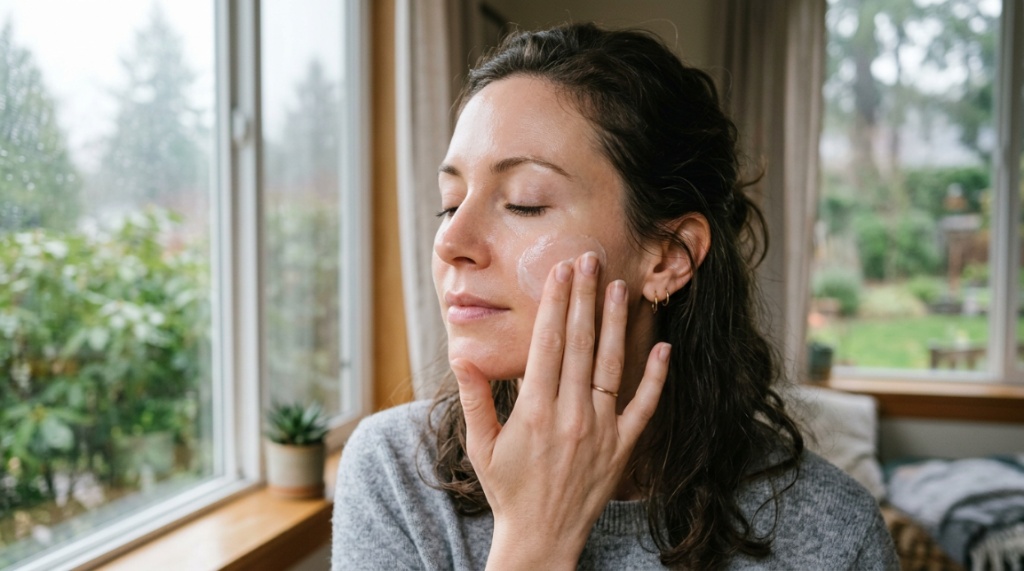
After applying a pea-sized amount to your face, use your ring fingers to gently press the cream into the skin for 10 seconds. Do not massage. This ensures the active ingredients penetrate without disturbing the barrier lipids.
Layering with SPF: The Correct Order
Anti-aging cream, then moisturizer, then SPF. Wait 3 minutes between each layer. In Washington’s overcast winter, apply SPF to the neck and hands too, as these areas age rapidly due to driver-side window exposure.
Nighttime Amplification for Overnight Repair
Apply a slightly thicker layer at night, especially during winter. Add a facial oil (like rosehip) over the cream 30 minutes later if you have flaky patches. This “sandwich” method effectively combats the dryness of heated bedrooms.
When Should You Reapply or Switch Creams?
Reapply a hydrating mist with your cream only if you feel tightness mid-day. Switch your primary cream when the average temperature changes by 10–15°F for a full week, not just a day or two of weird weather.
Signs Your Current Cream is Failing
- Small bumps on your forehead: The occlusive ingredients are too heavy.
- Stinging sensation upon application: Your barrier is compromised, or you’re using too much active.
- Dry patches still present by noon: You need more humectants, not more oil.
The Delayed Switching Rule
Never switch anti-aging creams abruptly. Mix a small amount of the new formula with your current one for 3 days. Washington’s volatile barometric pressure changes affect your skin’s permeability, and gradual integration prevents breakouts or irritation.
Can a Single Cream Work for Both Spokane and Seattle?
No. Spokane’s arid, continental climate (low humidity, strong sun) is vastly different from Seattle’s maritime weather. If you live in the rain shadow or travel across the Cascades, you must adjust your cream based on the local dew point, not your current city.
Adapting for the Rain Shadow (Olympic Peninsula)
Areas like Sequim receive 50% less rain. Here, you need a cream with built-in antioxidants like green tea and vitamin E to combat drier conditions. A heavy, moisture-suit cream might be too much.
Adapting for High Altitude (Cascades and Eastern WA)
At higher elevations, UV radiation increases 10–12% per 1,000 feet. Your anti-aging cream must include a robust SPF and ingredients like ectoin to protect against cold-induced oxidative stress.
How Do You Verify Product Claims for This Specific Climate?
Look for clinical tests in “temperate oceanic” or “cool Mediterranean” climates. Do not rely on claims from desert-based tests. Contact brands via live chat and ask if their products were tested in high-humidity, low-UV environments.
Decoding the Label: The First 5 Ingredients Rule
Ingredients are listed by volume. The first two (usually water and a carrier) matter. If a hyaluronic acid or peptide is listed fifth or later, it is negligible. This rule is critical when comparing creams for a climate that causes rapid ingredient breakdown.
The “Pill” Test for Humidity Resistance
Apply the cream, wait 10 minutes, then press a clean finger onto your skin. If it pills (rolls off), it will flake off during a rainy walk. This indicates the emulsifier system is weak for Washington’s humidity and sweat.
What Are the Top 4 Mistakes to Avoid in Washington?
Avoid these errors to maximize your investment and protect your skin. Correcting these common mistakes often yields better results than buying a more expensive product.
Mistake #1: Using a Night Cream as a Day Cream
Night creams are more viscous and lack SPF. Using them under makeup during a Seattle drizzle causes your face to appear greasy and attracts atmospheric pollutants. Always use a lighter-day formula with protection.
Mistake #2: Over-Exfoliating Because of Dryness
Exfoliating away flaky skin weakens your barrier. In Washington’s cold winter, use a 10% lactic acid only once a week, not daily. Excessive exfoliation creates micro-tears, which are aggravated by wind and rain.
Mistake #3: Skipping SPF on Overcast Days
As mentioned, UVA penetrates clouds. This is the #1 cause of premature aging here. Use a dedicated SPF on top of your anti-aging cream, even in February. Consider a powder SPF for easy reapplication during lunch.
Mistake #4: Buying One Formula for the Entire Year
Your skin is a living organ that responds to the season. Sticking to one heavy cream year-round leads to clogged pores in summer; using a gel year-round leads to dehydration in winter. Adjust your budget to have two options.
How to Budget for Year-Round Efficacy
You don’t need two full-size expensive creams. The strategy is to buy one high-quality, active-rich base cream and use a separate booster for seasonal adjustments. This saves money and improves outcomes.
The “Base and Booster” Strategy
- Buy: One base cream with ceramides and peptides (lightweight enough for spring).
- Winter Booster: Add a few drops of squalane oil to the base in cold months.
- Summer Booster: Mix a tiny amount of a hydrating gel toner into the base in July.
Key Price-Per-Use Considerations
- Cost per gram: A $50 jar must last 3 months, so use only a pea-sized amount.
- Expiration: Creams degrade quickly in humidity. Buy smaller sizes for the winter.
- Return policy: Purchase from stores with generous return policies to test climate compatibility.
Is There a Science-Based Rubric for Final Selection?
Yes, list your must-have ingredients, and then score candidates against your current weather conditions. This eliminates clever marketing and focuses on chemical reality.
The 4-Point Climate Compatibility Test
| Weather Factor | Required Ingredient | Why it Matters Here |
|---|---|---|
| High Humidity (Rainy) | Humectants (Glycerin, Hyaluronic Acid) | Pulls water into skin without leaving heavy residue. |
| Low Humidity (Winter) | Occlusives (Shea, Ceramides) | Prevents water from evaporating in heated rooms. |
| Cloudy UV | Broad-spectrum SPF 30+ (Zinc Oxide) | Reflects UVA that penetrates clouds. |
| Variable Temp | Niacinamide (5%) | Stabilizes barrier against sudden weather shifts. |
Practical Example of Scoring a Candidate
Take a cream with 1% Hyaluronic Acid, 2% Ceramides, but no SPF: it scores low for Washington’s daytime. Adding a separate SPF increases efficacy, but the load might be too heavy for July. Thus, a gel-based formula with integrated zinc oxide is mathematically better.
Where to Find Evidence-Based Guidance and Options
While pharmacies and beauty stores offer many options, not all are formulated for the Pacific Northwest’s specific atmospheric stress. Reading local beauty reviews and environmental dermatology sources will guide you better than viral trends.
For a curated list of top-performing products that have been pre-vetted for this exact climate, you can consult a dedicated resource on Washington weather anti-aging cream. This reference narrows down formulas tested against the humidity and temperature fluctuations described above.
Reading Local, Not Viral, Reviews
Ignore celebrity skincare routines. Instead, find reviews from users in Portland, Seattle, or Vancouver. Ask questions about whether the product “pilled” during mist or mantained hydration during a 5-day atmospheric river event.
Understanding Cosmetic Chemistry vs. Marketing
“Clinically proven” is not a regulated phrase. Look for actual percentages of ingredients on the label. A cream with 0.01% copper peptide is basically a moisturizer, not an anti-aging treatment, so you will waste money without adequate barrier support.
Building Your Personalized Action Plan for 2026
Your skincare routine must adapt monthly. Create a calendar reminder to analyze the 7-day forecast each quarter and adjust your cream’s thickness or booster accordingly.
Winter Protocol (Nov–Feb)
- Use a balm texture with ceramides and squalane.
- Wash with a cream cleanser only at night.
- Apply a sleep mask once a week.
Summer Protocol (Jun–Aug)
- Use a fluid lotion with gel texture.
- Ensure SPF 50 due to longer days.
- Keep a facial mist for midday refresh.
Transitional Protocol (Mar–May & Sep–Oct)
- Use a medium-weight emulsion.
- Apply a hydrating serum with vitamin C to prep for sun exposure.
- Exfoliate only if skin appears dull, not before rain fronts.
Frequently Asked Questions
Can I use the same anti-aging cream all year in Washington?
No, skin needs change with seasonal humidity and temperature. A fixed formula will either be too heavy in summer or insufficient in winter. Use a base cream with a seasonal booster to adapt effectively.
How soon should I see results with a new anti-aging cream?
For hydration, you should feel a difference in 2–3 days. For collagen and fine line reduction, wait 8–12 weeks. Continuously switching formulas prevents you from seeing long-term benefits.
Is it necessary to use a separate SPF in Washington?
Yes, especially on cloudy days. UVA rays are constant and cause collagen breakdown. If your anti-aging cream lacks SPF, you must layer a dedicated sunscreen on top every morning.
Why does my cream pill or roll off in humid weather?
Pilling occurs when a product’s emulsifiers cannot handle high water content in the air or the movement of rubbing. To prevent this, apply with light pressure and wait 90 seconds between products.
How many grams of cream should I use per application?
Use one-pea-sized amount (about 0.5 grams) for your face and neck. A 50-gram jar should last you around 2–3 months of daily use. Over-applying wastes product and clogs pores.
Do I need a “night” cream for Washington weather?
Not necessarily. Your regular base cream works at night if it contains lipid-repairing ingredients. A heavier night mask is only helpful for severe winter dryness, not essential year-round.
Can I trust customer reviews on Amazon for climate-specific advice?
Not directly. Most reviewers are from varied climates. Filter reviews by using the “search in reviews” function for terms like “Seattle,” “Portland,” or “winter.” This will give you more relevant user data.
Conclusion
Selecting the right anti-aging cream for Washington’s weather is not about chasing the latest luxury ingredient; it is about strategically matching your formula to the moisture and temperature of your immediate environment. Start by identifying your barrier health, understand the role of humectants and occlusives, and respect the invisible sun. Implement a base-and-booster system to adapt without buying excessive products. Track your skin’s monthly response and do not hesitate to pivot when a seasonal weather front settles in. A tailored approach of true climate-conscious care will offer you lasting hydration, improved elasticity, and a more resilient barrier against everything the Pacific Northwest throws at you.
About Author