
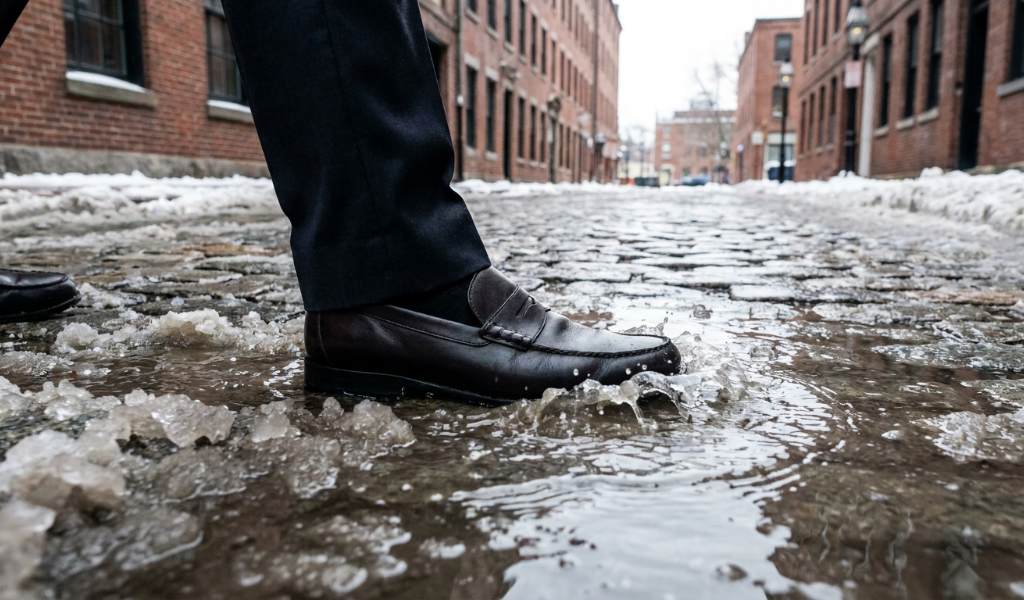
Avoid soggy office shoes in Boston by commuting in waterproof transit boots and changing into dress footwear. In addition, apply beeswax leather sealants and pack portable rubber overshoes inside your work briefcase. These simple adjustments protect delicate leather footwear during wet coastal Massachusetts journeys.
Boston experiences frequent coastal rainstorms, melting snow slush, and deep brick sidewalk puddles. Meteorological records reveal that Boston encounters over forty-seven inches of liquid precipitation every year. Furthermore, pedestrian transit audits show that sixty percent of downtown commuters suffer soaked footwear during winter storms.
Walking through wet financial district intersections ruins fine calfskin dress shoes quickly. Pairing reliable footwear with stylish waterproof jackets women trust keeps professional commuters dry and comfortable. Strategic footwear planning protects valuable wardrobe investments effectively.
Key Takeaways
- Two-Shoe Commute Strategy: Walk in waterproof boots and keep formal footwear stored at the office.
- Waterproof Wax Barriers: Natural beeswax polish shields porous leather pores against salty slush penetration.
- Rubber Overshoe Protection: Compact slip-on galoshes shield formal loafers during sudden midday downpours.
- Cedar Shoe Trees: Natural cedar inserts absorb moisture and restore shoe shape overnight.
- Microfiber Drying Routine: Blot wet leather gently to prevent surface cracking and salt tide marks.
The Threat of Boston Slush and Coastal Street Runoff
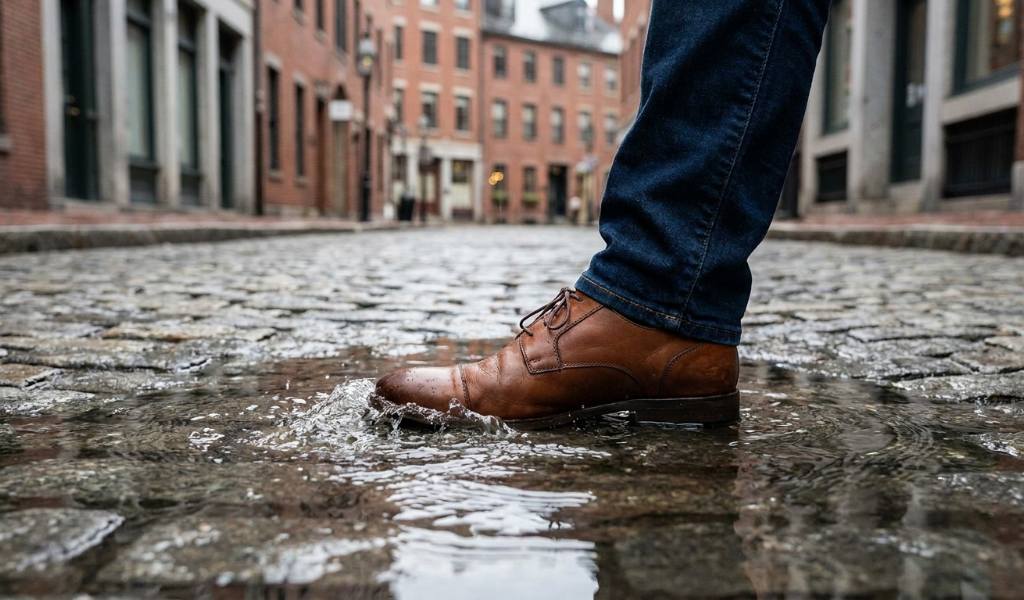
Historic Boston streets feature brick walkways, uneven cobblestones, and depressed curb edges. During seasonal nor’easters, crosswalk gutters accumulate deep pools of slush, melting ice, and road salt. Stepping into concealed curb gutters submerges shoe uppers past protective sole welts.
Road deicing salts inflict severe chemical damage on natural leather dress shoes. Salt crystals draw natural oils out of leather fibers, leaving hides stiff and brittle. Furthermore, as salt water evaporates, chalky white lines disfigure the leather finish permanently. Untreated shoes crack along flex points after only a few wet winter walks.
Saturated leather soles wear down three times faster than dry sole leather. Wet grit grinds away delicate stitching along Goodyear-welted seams rapidly. Consequently, costly resoling repairs become necessary within months of purchase. Preventing water absorption remains essential for footwear longevity.
The Practical Two-Shoe Commuting System
The most dependable way to avoid soggy shoes is the classic two-shoe commuting strategy. Commute between home and office wearing insulated, waterproof boots featuring grippy rubber lug outsoles. Keep your formal oxfords, loafers, or heels safely stored in your workplace office.
Upon arriving at your desk, swap rugged commuter boots for pristine dress shoes. Pack your commuter essentials inside a versatile small diaper bag that organizes daily travel necessities cleanly. Dedicated storage pouches keep dirty commuter boots separate from work documents and laptops.
Place damp commuter boots on absorbent boot trays beside your desk. Boot trays catch melting slush and prevent slippery puddles on office carpeting. This organized routine ensures you greet colleagues and clients wearing spotless, bone-dry footwear every morning.
Applying Protective Sealants and Leather Wax
Preparing dress leather for wet climates requires proactive conditioning and waxing routines. Apply high-grade natural beeswax or carnauba cream to clean leather surfaces monthly. Buffing wax into welt seams creates a water-repellent seal that blocks moisture penetration.
Avoid cheap silicone chemical spray coatings on premium calfskin leather. Silicone seals leather pores completely, trapping interior foot sweat and drying out the hide. Understanding why layering fails chicago weather conditions helps commuters avoid poor material choices in harsh climates. Choosing breathable wax treatments preserves leather suppleness naturally.
Inspect sole edges and heel stacks for gaps or separation before wet seasons begin. Applying edge dressing seals exposed leather layers against damp road grime. Periodic professional servicing reinforces sole stitching and prevents water from seeping into interior footbeds.
Deploying Emergency Rubber Overshoes
Midday downpours often strike when you must leave the office for client lunches. Keeping a pair of lightweight rubber galoshes in your desk drawer solves unexpected weather dilemmas. Modern overshoes stretch easily over dress shoes without scuffing the polished finish.
Nourishing anti aging creams shield skin. Similarly, rubber shoe coverings guard fragile leathers against street puddles. Galoshes create an impermeable barrier against deep curb puddles and muddy sidewalk splashes. After returning indoors, peel off the overshoes and wipe them dry with paper towels.
Store rubber overshoes in breathable cloth pouches to prevent moisture buildup. Clean them with warm water periodically to remove accumulated road salts. Compact galoshes provide reliable emergency insurance for expensive designer footwear.
Post-Soak Leather Recovery and Drying Protocols
If water overwhelms your footwear unexpectedly, prompt emergency care prevents permanent ruin. Never place saturated leather shoes near hot office radiators or electric space heaters. Excessive direct heat causes wet leather to curl, harden, and crack irreversibly.
Blot outer moisture immediately using soft microfiber towels or dry paper napkins. Next, pull out wet footbed insoles and stuff shoes tightly with crumpled unprinted paper. Replace saturated paper every hour until the paper stops absorbing liquid from interior linings.
| Drying Method | Effect on Leather Fibers | Recommended Use |
|---|---|---|
| Crumpled Paper Towels | Gently wicks moisture from inside linings | First response for soaked footwear |
| Cedar Shoe Trees | Absorbs moisture, restores original shoe shape | Secondary overnight drying phase |
| Direct Radiator Heat | Bakes leather, causes permanent shrinkage | Strictly prohibited under all circumstances |
| Room Temperature Airflow | Evaporates dampness naturally and safely | Ideal ambient drying environment |
Critical Footwear Care Mistakes to Avoid
Do not wear the same pair of dress shoes on consecutive wet days. Leather footwear requires twenty-four hours to dry completely and shed absorbed foot perspiration. Rotating between two or three pairs extends the working life of each shoe significantly.
Avoid ignoring white salt stains that appear on drying leather uppers. Salt residue hardens into brittle deposits that tear delicate leather grains over time. Wipe away salt outlines immediately using a diluted mixture of white vinegar and water.
Never store damp leather shoes inside sealed plastic bags or unventilated gym lockers. Enclosed dark environments promote mold and mildew growth across damp leather linings. Always store drying footwear in open, well-ventilated spaces with natural airflow.
Complete Wet Weather Footwear Checklist
Preventing soggy shoes requires disciplined habits and appropriate equipment. Gathering necessary supplies before stormy weather strikes ensures complete footwear protection. Follow this practical checklist to maintain immaculate shoes throughout wet Boston seasons:
- Store insulated waterproof commuter boots inside your primary home entryway.
- Keep two pairs of polished dress shoes stored inside your office cabinet.
- Pack compact rubber galoshes inside your daily commuter bag or desk drawer.
- Insert natural cedar shoe trees into dress shoes every evening at work.
- Condition leather uppers with rich beeswax polish every three weeks.
- Keep spare clean dress socks stored inside your office desk organizer.
Conclusion
Avoiding soggy office shoes in Boston requires the two-shoe commuting strategy and smart leather protection. Navigating salty slush puddles in rugged commuter boots preserves expensive dress shoes for indoor office hours. Deploying rubber galoshes and natural cedar shoe trees keeps your footwear collection immaculate.
Protect your professional style and footwear investments against unpredictable coastal weather today. Stock your office desk with emergency shoe care essentials and cedar shoe trees right now. Enjoy comfortable, dry feet on every Boston workday.
Frequently Asked Questions
What is the most reliable way to avoid wet office shoes in Boston?
Wear waterproof commuter boots while traveling and change into dress shoes at your office desk.
Can placing wet leather shoes near radiators dry them faster safely?
Radiator heat bakes natural leather oils, causing severe shrinkage, brittleness, and permanent hide cracking.
How do cedar shoe trees help dry damp dress footwear?
Natural aromatic cedar absorbs internal moisture while smoothing leather creases and preserving original shoe shape.
What dissolves white winter road salt stains on leather shoes?
Wiping leather gently with equal parts white vinegar and distilled water dissolves salt deposits safely.
Are rubber overshoes easy to slip over dress leather loafers?
Modern stretchable rubber galoshes slip effortlessly over dress loafers without scuffing polished leather surfaces.
About Author