
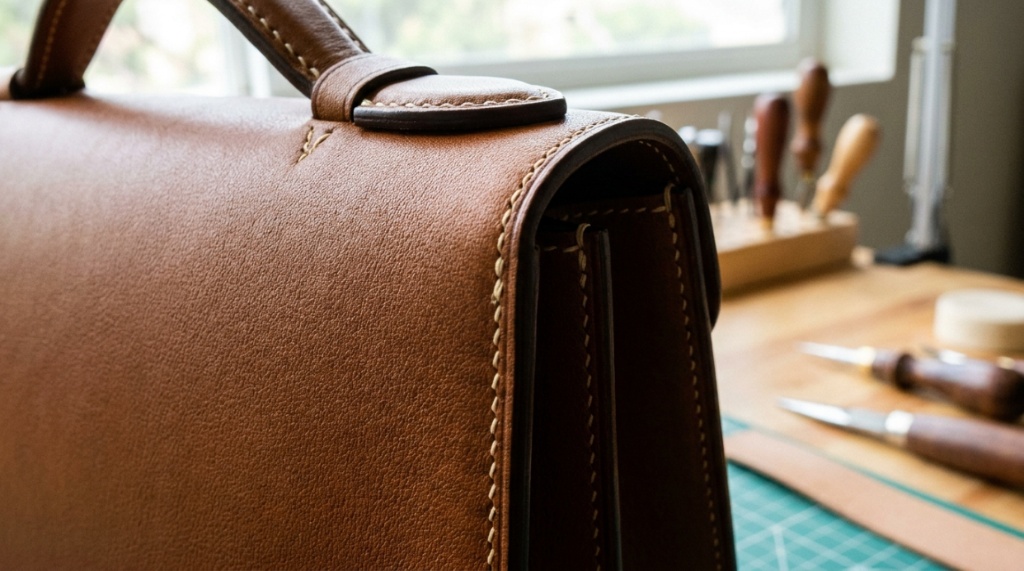
I once stood in a department store holding two visually identical tan top handle bags — one priced at $380, the other at $1,200. In photographs, they looked interchangeable. In hand, the difference was immediate and unmistakable: the expensive one felt alive — warm, supple, with depth in its color that seemed to glow from within the leather rather than sitting on the surface. The cheaper one felt flat, plasticky, and strangely cold despite looking nearly identical from three feet away. That moment taught me that leather top handle bags reveal their quality through touch, smell, and close inspection rather than visual appearance alone — and that knowing what to look for saves thousands in mistaken purchases. A premium handbag constructed from genuinely high-quality leather will develop beauty over decades while an inferior one begins deteriorating within months, regardless of what it cost or what brand name it carries. This guide teaches you the specific sensory and visual tests that distinguish investment-grade leather from its convincing but ultimately disappointing imitators.
What Does Genuine High-Quality Leather Feel Like?
High-quality full-grain leather feels warm to the touch (not cold like synthetic), gives slightly under finger pressure and springs back immediately, has a subtle natural grain variation visible on the surface, and produces a rich, earthy smell that synthetic materials cannot replicate regardless of chemical fragrance additives.
The touch test protocol:
- Temperature: Press the leather with your palm for 3 seconds. Genuine leather absorbs and radiates body heat — it feels warm almost immediately. Synthetic materials and heavily coated leathers remain cool because they resist thermal transfer.
- Suppleness: Press your thumb into the surface with moderate pressure. Quality leather depresses slightly and creates small radiating wrinkles around the pressure point that disappear within seconds. Stiff, unyielding surfaces indicate heavy correction or bonded material.
- Surface texture: Run your fingertip lightly across the surface. Full-grain leather has subtle textural variation — tiny irregularities, grain direction, and natural marks that feel organic. Perfectly uniform texture indicates machine-stamped artificial grain.
- Weight: Lift the bag by one handle. Full-grain leather has substantial weight relative to its thickness. Suspiciously lightweight bags often use split leather, bonded leather, or synthetic substrates that lack the density of genuine quality hides.
- Flexibility: Gently fold a corner of the bag (if construction allows). Quality leather flexes smoothly without cracking, wrinkling sharply, or revealing a different color at the fold line. Cracking or color change at folds indicates painted or coated inferior material underneath.
How Can You Identify Leather Grade by Visual Inspection?
Full-grain leather shows natural surface variations (slight color differences, tiny pores, occasional marks from the animal’s life), while corrected-grain leather appears perfectly uniform with a stamped pattern — the more uniform the surface, the more heavily processed (and lower quality) the leather.
Visual identification guide:
- Full-grain (highest quality): Visible natural pores in irregular patterns. Subtle color variation across the surface. May show faint natural marks (healed scratches, insect bites, growth lines). These “imperfections” prove the leather is minimally processed — only the finest hides can be used full-grain because every flaw shows.
- Top-grain (high quality): Lightly sanded surface with less visible pore structure. More uniform color than full-grain. Still shows some natural variation but less character. A thin finishing coat creates a more consistent appearance.
- Corrected-grain (medium quality): Heavily sanded and stamped with an artificial grain pattern. Perfectly uniform appearance — every square inch looks identical. Often has a slightly plastic sheen from thick pigment coating. The uniformity that seems luxurious is actually the indicator of inferior material.
- Bonded/reconstituted (low quality): May peel at edges revealing fibrous underlayer. Rigid rather than supple. Often has an artificial smell (chemical rather than earthy). Surface coating chips with wear revealing grey or brown substrate.
The paradox: the “perfect-looking” bag is usually the lower quality one. Genuine high-quality leather has character, variation, and subtle irregularity — because it has not been processed into uniformity. Embrace natural variation as a quality indicator.
What Do Stitching and Edge Details Tell You About Quality?
Consistent stitch length (2.5–3.5mm), even thread tension throughout, backstitch reinforcement at stress points, and hand-finished edges with multiple visible paint layers indicate premium construction — while irregular stitching, loose threads, raw or single-coat edges, and visible glue indicate budget manufacturing.
Stitching quality indicators:
- Stitch consistency: Examine a 2-inch section closely. Every stitch should be the same length within 0.5mm. Machine stitching achieves this more easily; hand-stitching shows slightly more variation but with a distinctive diagonal pattern (saddle stitch) that indicates handwork.
- Thread quality: Quality thread is slightly waxy, consistent in thickness, and shows no fraying even at exposed points. It should be the same color throughout without fading or discoloration. Pull gently — quality thread resists without stretching.
- Stress point reinforcement: Where handles attach, where straps connect, and at closure points, look for additional stitching (bar tacks, X-patterns, or extra passes). These areas bear the most force and premium bags reinforce them visibly.
- Stitch holes: On premium bags, stitching holes are pre-punched with precision tools — each hole is the same size and perfectly aligned. On budget bags, needle-pierced holes vary in size and may show stress tears.
Edge finishing inspection:
- Premium: Edges are smooth, slightly rounded, and show multiple visible layers of edge paint in consistent color. No roughness, no visible raw leather, no bubbling or peeling.
- Mid-range: Edges are painted but may show slight texture or fewer layers. Generally acceptable but less refined than premium.
- Budget: Edges are raw, roughly painted with a single coat, or folded and glued (rather than finished). Paint may already show cracking or peeling even when new.
If you are expanding your collection beyond structured luxury and need something more casual for the warmer months, check out these Perfect Beach Bags for Teenage Girls in 2026. Transitioning from a sophisticated workday look to a relaxed weekend vibe is all about choosing the right material for the occasion.
How Do You Evaluate Hardware Quality on a Leather Top Handle Bag?
Quality hardware has visible weight, produces a solid sound when tapped (not hollow or tinny), shows precise engravings with consistent depth, operates smoothly with satisfying resistance, and maintains its finish when rubbed firmly with a thumb — inferior hardware feels light, sounds hollow, shows imprecise markings, and may reveal base metal color when friction is applied.
Hardware testing methods:
- Weight test: Hold just the hardware (clasp, lock, or buckle) between your fingers. Solid brass or zamac hardware has noticeable heft. If it feels featherlight or hollow, the metal is thin or the base material is lightweight pot metal.
- Sound test: Tap hardware gently with your fingernail. Quality metal produces a solid, resonant “tink.” Thin or hollow hardware produces a higher-pitched, tinny sound. This difference is immediately obvious when comparing side-by-side.
- Finish test: Rub the hardware firmly with your thumb for 10 seconds. Quality PVD plating shows no change. Thin electroplating may show subtle color shift or reveal the underlying metal. This indicates the finish will wear through at contact points within months of use.
- Function test: Operate every closure, zipper, and clasp multiple times. Quality hardware engages with smooth, precise action and satisfying resistance. It should not require force, stick, or feel gritty. Zippers should glide without catching on fabric or bunching.
- Engraving inspection: Examine brand stamps and logos on hardware with a magnifier if possible. Premium brands produce crisp, even-depth engravings with perfect font consistency. Budget brands show shallower, uneven, or slightly misaligned engravings.
What Interior Details Indicate Premium Leather Bag Quality?
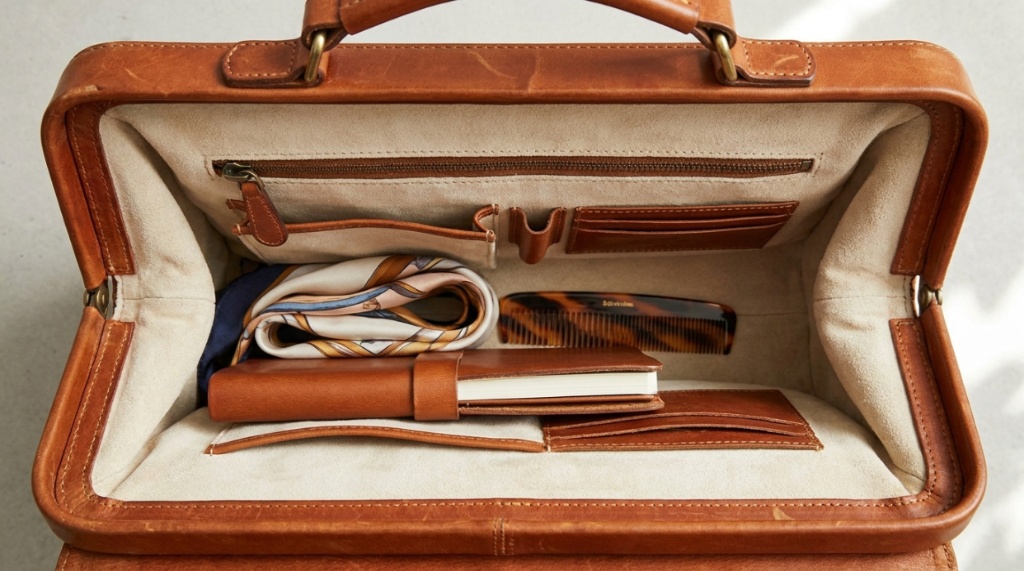
Premium leather bags feature leather or suede linings (not fabric), heat-stamped brand markings with serial numbers, clean interior seams without exposed raw edges, functional organizational pockets with quality zippers, and attention to detail in areas customers rarely see — because luxury brands maintain standards regardless of visibility.
Interior quality checklist:
- Lining material: Leather or microsuede lining = premium. Cotton twill = good mid-range. Thin synthetic = budget. The lining endures constant contact with items and reveals quality commitment where many brands cut costs.
- Interior seams: Should be fully finished — no raw edges, no visible glue, no fraying. Premium bags often pipe or bind interior seams for a completely clean finish.
- Brand authentication: Heat-stamped logos (not printed or stuck-on labels), serial numbers, date codes, or craftsman marks indicate production tracking and quality control systems.
- Pocket construction: Interior pockets should have reinforced openings, quality zipper pulls, and proper stitching. Pockets that tear easily or use inferior zippers indicate overall budget construction despite exterior appearances.
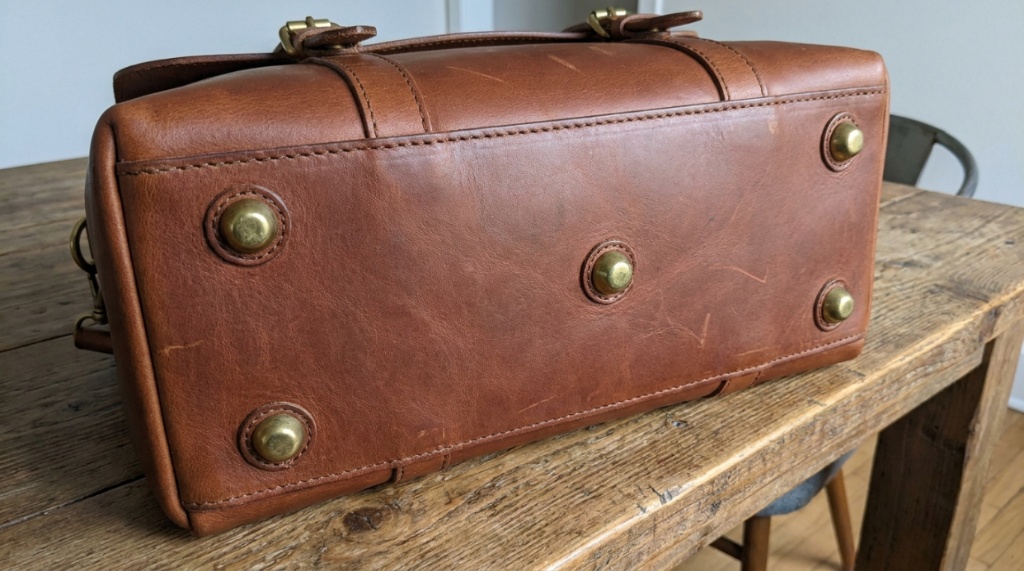
- Bottom structure: Quality bags have internal structure (often a rigid bottom insert) that maintains shape. The bottom lining should be smooth and fully attached — not loose, bunched, or revealing construction materials beneath.
How Can You Test Leather Quality When Shopping Online?
When shopping online, evaluate leather quality through: detailed product descriptions specifying exact leather type and origin, high-resolution zoom photos showing natural grain variation, brand transparency about tannery partnerships, return policies that allow physical inspection, and independent reviews describing tactile experience and aging characteristics.
Online evaluation strategies:
- Product descriptions: Quality brands specify: leather type (full-grain, vegetable-tanned, etc.), origin (Italian calfskin, French lambskin, etc.), and tannery name when possible. Vague terms like “genuine leather” or “real leather” indicate lower grades — these are legal minimums, not quality indicators.
- Photography: Zoom into product images. Can you see natural grain variation? Subtle texture differences? These indicate real, minimally processed leather. Perfectly uniform, matte surfaces with no variation suggest heavy correction or synthetic materials.
- Brand transparency: Brands using quality leather typically highlight their material sourcing — naming tanneries, explaining processes, and showing production. Brands that avoid material specifics often have less impressive materials to discuss.
- Return policies: Generous return windows (30+ days) indicate brand confidence in physical inspection satisfaction. Restrictive or final-sale policies may indicate products that disappoint in person versus online.
- User reviews: Search for reviews mentioning touch, smell, and aging. Comments like “feels plasticky,” “chemical smell,” or “peeling after 3 months” indicate quality issues that photos cannot reveal.
For detailed reviews of leather top handle bags evaluated through hands-on quality inspection, premium leather top handle bags reviewed for quality provides tactile assessments, construction analysis, and aging observations from extended use — exactly the information online photos cannot provide.
What Red Flags Indicate Low-Quality Leather Disguised as Premium?
Red flags include: chemical or plastic smell (not rich leather scent), perfectly uniform surface with no natural variation, peeling or bubbling at edges when new, excessive stiffness that does not soften with handling, visible fabric or paper backing when edges are examined, and branding that emphasizes “genuine leather” (the lowest legal quality designation).
Specific warning signs:
- “Genuine leather” labeling: Counterintuitively, “genuine leather” is the lowest quality grade that can legally be called leather. It often means split leather (inner layers) with an artificial surface coating. Premium bags specify “full-grain” or “top-grain” — never just “genuine.”
- Uniform perfection: Natural leather is never perfectly uniform. If every square inch of a bag looks identical in color, texture, and sheen, the surface has been heavily sanded and stamped with artificial grain.
- Chemical smell: Quality leather smells rich, earthy, and slightly sweet. Chemical, plastic, or “new car” smell indicates heavy processing chemicals, synthetic coatings, or non-leather materials.
- Edge inspection: Look at any visible raw edge (often inside the bag or along zipper tape). Full-grain leather shows consistent color throughout its thickness. Bonded or coated leather reveals grey/brown fibrous material under the surface layer.
- Crease behavior: Gently crease a small area. Quality leather creases softly and recovers. Poor quality leather creases sharply with visible color cracking at the fold line — revealing that color exists only on the surface coating, not within the leather itself.
- Price-to-claimed-quality mismatch: If a brand claims “Italian full-grain leather” at $89, the math does not work. Full-grain Italian leather alone costs $15–$30 per square foot at wholesale. A bag requires 8–15 sq ft. Material cost alone exceeds budget pricing.
Conclusion
Spotting high-quality leather top handle bags requires engaging all your senses — touch for warmth and suppleness, sight for natural grain variation and precise construction, smell for authentic leather scent, and sound for solid hardware resonance. The highest quality leather reveals itself through subtle imperfection (natural variation, individual character marks, organic texture) while inferior leather betrays itself through artificial perfection (uniform surface, chemical smell, rigid feel). Master these identification skills and you will never overpay for inferior materials disguised with premium marketing.
The skills in this guide take minutes to learn and save thousands over a lifetime of handbag purchases. Next time you consider a leather top handle bag — whether at $300 or $3,000 — run through these tests before committing. Touch, smell, flex, inspect edges, test hardware, examine stitching, check the interior. A bag that passes every test at any price point delivers genuine quality. A bag that fails at any price point is not worth your money regardless of the brand name on the label.
What quality indicator do you check first when evaluating a leather bag — and has it ever saved you from a disappointing purchase? Share your inspection process below.
Frequently Asked Questions
Can expensive bags still have low-quality leather?
Yes — price alone does not guarantee quality. Some designer brands charge premium prices for corrected-grain or coated leathers that justify the brand markup but not the material quality. Always physically inspect regardless of price. Some $300 bags from leather-focused brands outperform $1,500 bags from fashion-focused brands in material quality.
How does leather quality affect a bag’s aging?
Full-grain leather develops beautiful patina — darkening slightly, softening, and gaining character that makes the bag more attractive with age. Corrected-grain leather maintains its appearance for 1–2 years then degrades — peeling, cracking, or fading without developing character. The difference between “aging” and “deteriorating” is leather quality.
Is Italian leather always better than other origins?
Italian leather has an excellent reputation earned through centuries of tanning expertise, but origin alone does not guarantee quality. French, Spanish, and British tanneries produce equally excellent leather. Some Italian tanneries produce lower-grade leather as well. Evaluate the specific tannery and leather grade rather than relying on “Italian” as a quality shortcut.
What is the difference between vegetable-tanned and chrome-tanned leather?
Vegetable tanning uses natural plant extracts over weeks-to-months, producing leather that ages beautifully with rich patina development. Chrome tanning uses chemical salts in hours, producing uniform leather that resists aging but does not develop character. Vegetable-tanned is generally preferred for premium bags; chrome-tanned dominates mid-range production due to speed and cost advantages.
How do I test leather quality on a bag I already own?
Apply a small drop of water to an inconspicuous area. Full-grain leather absorbs water slightly (darkens temporarily, dries without damage). Coated or corrected leather repels water with visible beading. This indicates how processed the surface is — more absorption means less surface processing means higher leather grade. Always test in a hidden area first.
Does color choice affect leather quality in top handle bags?
Darker colors (black, dark brown, navy) can hide lower-quality leather because heavy pigmentation masks natural variation and imperfections. Lighter colors (tan, cream, nude) require higher-grade leather because every flaw shows through light pigmentation. If a brand offers a style in both black and tan, the tan version is a better quality indicator — it requires better raw material to execute well.
Can leather quality be restored on an older bag?
Full-grain leather can be restored through professional cleaning, conditioning, and color refreshing — often looking better than new after treatment. Corrected-grain and bonded leather cannot be meaningfully restored once the surface coating fails. This is another long-term argument for investing in higher-grade leather: repairability extends useful life by decades rather than requiring disposal when surface coatings inevitably fail.
About Author